Petroleum Engineers Association | Blog | Wireline Operations and Well Control: Complete Guide for Oil & Gas Professionals (2026)
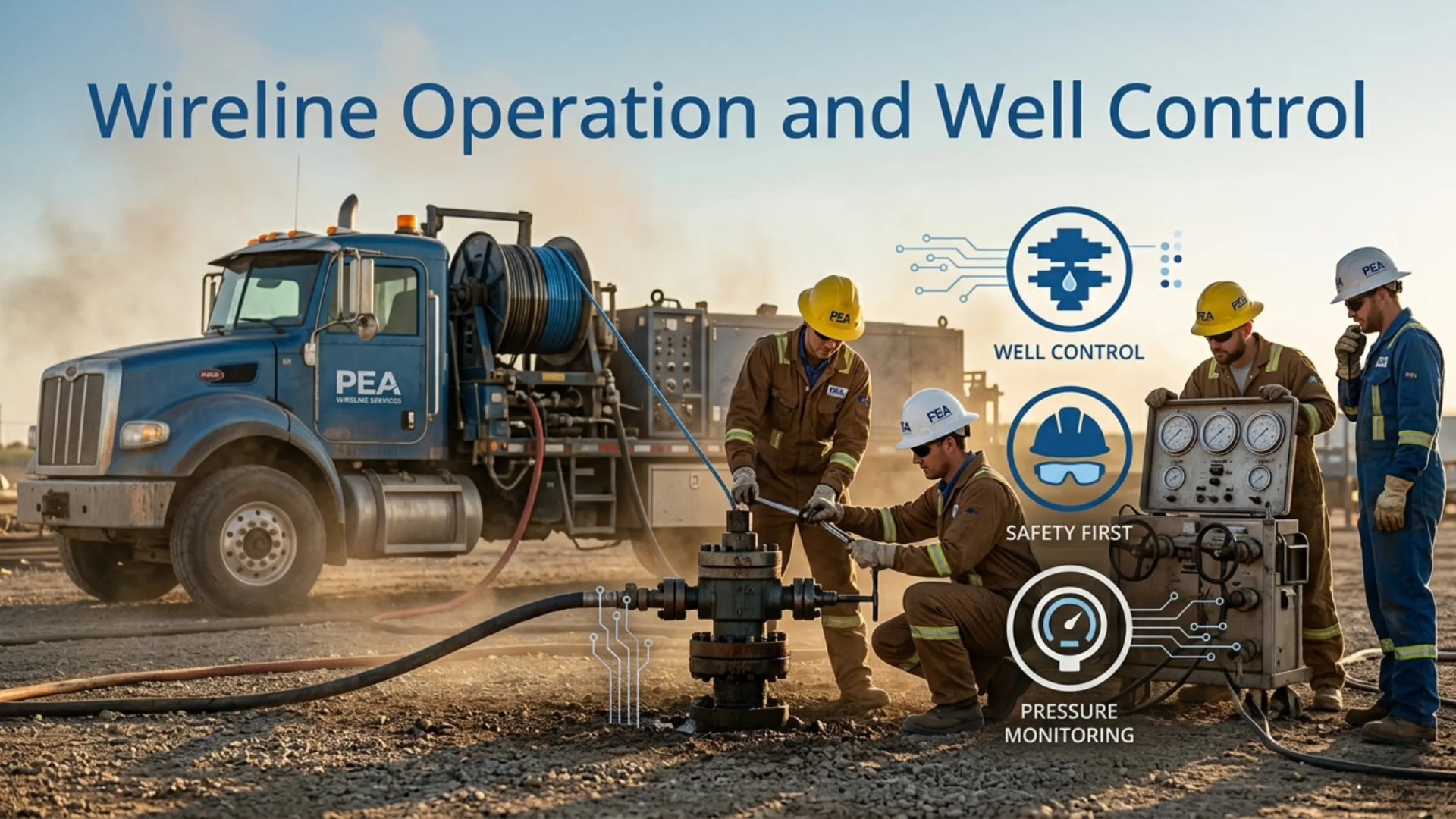
In the modern oil and gas industry, efficiency, safety, and cost optimization are critical for successful operations. One of the most widely used and effective intervention techniques is wireline operations.
Wireline allows engineers to inspect, maintain, and enhance well performance without deploying a full drilling rig—saving both time and money.
However, there’s one crucial factor that determines success:
Well control.
Without proper well control, even the most routine wireline job can turn into a high-risk operation.
This guide will walk you through wireline operations, equipment, applications, and well control practices in a simple, practical way.
What Are Well Phases and Well Interventions?
Every oil and gas well goes through four key phases:
- Drilling
- Completion
- Production
- Intervention
Wireline operations are mainly used during the intervention phase, where the objective is to:
- Diagnose well issues
- Improve production
- Maintain well integrity
👉 Think of well intervention as a maintenance and optimization process that extends the life of a well.
What is Wireline in Oil and Gas?
Wireline is a thin cable (metallic or electric) used to lower tools into the wellbore for various operations.
Types of Wireline:
-
Slickline
A single solid wire used for mechanical operations -
Electric Line (E-Line)
A cable with electrical conductors used for logging and data transmission
Wireline operations are preferred because they are:
- Fast
- Cost-effective
- Less disruptive to production
Advantages and Disadvantages of Wireline Operations
Advantages
- Lower operational cost compared to rig-based intervention
- Quick deployment and execution
- Minimal production downtime
- High flexibility in operations
Disadvantages
- Limited load-bearing capacity
- Depth and pressure limitations
- Requires skilled workforce
- High risk without proper well control
👉 Key takeaway: Wireline is efficient—but requires precision and expertise.
Wireline Applications in Oil and Gas
- Well Logging – Collecting subsurface data
- Perforation – Creating pathways for hydrocarbons
- Plug Setting & Retrieval
- Fishing Operations – Retrieving lost tools
- Well Diagnostics & Monitoring
These applications directly impact production optimization and reservoir evaluation.
Wireline Types and Properties
Choosing the right wireline is critical for safe and efficient operations.
Common Types:
- Slickline
- Braided line
- Electric line
Key Properties:
- Tensile strength
- Corrosion resistance
- Temperature tolerance
- Diameter and weight
👉 Incorrect selection can lead to equipment failure and operational delays.
Wireline Surface Equipment
Wireline operations rely on specialized surface equipment, including:
- Wireline Unit (Truck or Skid)
- Cable Drum
- Control Panel
This equipment is responsible for deploying and controlling wireline tools during operations.
Pressure Control Equipment in Wireline Operations
Pressure control equipment is essential to ensure safe operations under well pressure.
Key Components:
- Lubricator – Allows tool entry into pressurized wells
- Blowout Preventer (BOP) – Prevents uncontrolled flow
- Valves and Sealing Systems
👉 These components form the first line of defense against well control incidents.
Wireline Downhole Equipment
Wireline tools perform various tasks inside the wellbore.
Common Tools:
- Logging tools
- Perforating guns
- Setting tools
- Pressure and temperature sensors
These tools are designed to operate in extreme downhole conditions, including high pressure and temperature.
Well Control During Wireline Operations
Well control is the most critical aspect of wireline intervention.
Key Practices:
- Proper rig-up procedures
- Thorough pressure testing before operations
- Continuous monitoring of well conditions
- Emergency preparedness and response
Risks of Poor Well Control:
- Blowouts
- Equipment damage
- Safety hazards
- Environmental impact
👉 Important: Well control is not just a procedure—it is a continuous process throughout the operation.
Best Practices for Safe Wireline Operations
To ensure safety and efficiency:
- Always follow standard operating procedures (SOPs)
- Conduct pre-job risk assessments
- Use certified and well-maintained equipment
- Ensure proper crew training
- Monitor pressure and well conditions in real-time
Wireline operations are an essential part of modern oil and gas production. They offer:
✔ Cost efficiency
✔ Operational flexibility
✔ Faster intervention
But their success depends heavily on:
👉 Strong well control practices
👉 Skilled personnel
👉 Proper equipment selection
In the oil and gas industry, efficiency drives performance but well control ensures safety.
Want to master Wireline Operations and Well Control?
Join our industry-focused training designed for engineers and professionals looking to enhance their field expertise: Wireline Operation and Well Control
Related Blogs:
- Drilling and Completion
- 6th October, 2025
Directional Drilling Practices and Applications
In the ever-evolving landscape of the oil and gas industry, directional drilling has ...
- Drilling and Completion
- 9th October, 2025
Extended Reach Drilling Wells
Imagine drilling not just down but miles across the earth, reaching oil and gas reser...

Leave a comment on this Blog/Article.