loader

Loading...

loader
+91 6205464268 info@peassociations.com
  • About Us
  • Contact Us
  • Membership
logo
Log in Membership
  • Our expertise
  • Upcoming Public Courses
  • Upcoming events
    • Upcoming events
    • Workshops
    • Webinars
  • Company
    • Company
    • About us
    • Membership
    • Meet Our Team
    • Gallery
    • Blogs & Articles
    • Testimonials
    • Download
    • Certificate
  • e-Learning
  • Contact Us
  • Quiz
Press Enter To See All Search Results
Search results for:
    LOG IN
    Subscribe To Our Newsletter

    PEA Technical Slides

    image
    Premium  icon
    Download

    Waterflooding vs. Surfactant Flooding: Reservoir Simulation

    This guide compares waterflooding with surfactant flooding through reservoir simulation. It starts with the fundamentals — Darcy's law, material balance, and PVT — then moves through full field modelling, how a simulator discretises the reservoir in space and time, and how ECLIPSE sections map onto the flow equation. The text covers waterflooding as a secondary recovery method: voidage replacement, the ideal waterflood project, VRR and how it is calculated, and the development strategy controls for injectors and producers. It then turns to surfactant flooding as an EOR process, explaining how reduced oil-water interfacial tension mobilises capillary-trapped oil, the extra continuity equations for surfactant and brine, and the five unknowns per grid block the model solves. It works through the surfactant model in detail — adsorption, capillary desaturation and the capillary number, wettability change, relative permeability interpolation, and the ECLIPSE 100 keywords for each — and closes with a case study whose sensitivity runs show surfactant concentration to be the parameter with the largest effect on field performance.
    image
    Premium  icon
    Download

    Mystery of Capillary Pressure From Core Lab to Simulation Model

    This guide follows capillary pressure from the core laboratory through to the reservoir simulation model. It explains why Pc controls the initial hydrocarbon distribution above the free water level, how it feeds STOIIP, irreducible water saturation, and transition zone thickness, and why poor rock quality means extended transition zones and more oil left in them. The text covers wettability and fluid distribution in pore space, drainage and imbibition curves, and how Pc curves shift with permeability and rock type. It then works through the laboratory measurements — porous plate, centrifuge, and mercury injection, with the strengths and limits of each — and the conversion from lab to reservoir conditions using interfacial tension and contact angle. It closes with saturation-height modelling: the Leverett J-function, Thomeer and Brooks-Corey fits, the three model categories from SCAL-only to log-only, and worked examples of initialising a simulation model through the oil, transition, and water zones.
    image
    Premium  icon
    Download

    Carbonate Rock Typing

    This guide covers how carbonate reservoirs are divided into rock types and why they are harder to characterise than sandstones. It explains the multiple porosity types in carbonates and the heavy diagenetic overprint that makes poro-perm relationships unpredictable, then works through the data sources used for rock typing — poro-perm plots, X-ray CT scans, thin sections, MICP, and capillary pressure. The text covers the quantitative methods: Reservoir Quality Index, Flow Zone Indicator, Winland's R35, discrete rock types, the modified Lorenz plot, and Lucia's rock fabric number. It then details pore classification — primary versus secondary pores, Lucia's split into interparticle and vuggy porosity, separate versus touching vugs, and the three Lucia petrophysical classes based on grain and crystal size — with thin-section examples throughout and a final comparison of all the rock typing methods on one dataset.
    image
    Premium  icon
    Download

    Machine Learning for Formation Evaluation

    This guide covers how machine learning is applied to petrophysics — predicting shear and compressional slowness, TOC, rock types, lithofacies, net sand, permeability, and water saturation from log data. It walks through the full data workflow: problem definition, extraction, cleaning and handling missing values with Pandas, outlier checks with box plots, correlation heat maps to pick the right input features, and scaling with min-max, standard, or robust scalers. The text explains bias and variance, model evaluation through train-test splits, mean square error, confusion matrices, and k-fold cross validation. It then covers the algorithms themselves — decision trees and the Gini index, random forests, and neural networks with forward and backward propagation — plus unsupervised k-means clustering and the elbow method for choosing cluster count, with worked examples of permeability prediction and rock typing throughout.
    image
    Premium  icon
    Download

    Pressure & Sampling Logging Tools

    This guide covers how formation pressure and fluid samples are acquired downhole and at surface. It explains where pressure and sampling tools sit within the wider well logging suite, and compares bottomhole sampling by wireline and DST against wellhead and separator recombination sampling — including when each applies, why separator sampling needs an accurate GOR, and how to stabilise a well before taking samples. The text then details the tools themselves: RFT, MDT, and RDT configurations, single probe, multi-probe and dual packer arrangements, pump-out and multi-sample modules, and the optical fluid analyser that separates oil, water, and gas by their absorption peaks. It closes with pressure test interpretation — the pretest, drawdown and buildup sequence, mobility calculation, and how to tell a valid test from a tight or un-stabilised one.
    image
    Premium  icon
    Download

    Production Analysis

    This guide sets out how production data is used to find and fix underperforming wells. It follows a define-measure-analyze-improve-control workflow: set the reservoir and well KPIs, compare wells against them, work out why the laggards are behind, recommend actions, and monitor the result. The text covers surveillance dashboards and GIS maps that show rate, pressure, water cut, and cumulative volumes across a field, data mining through line and scatter charts to spot the factors driving performance, and decline curve analysis using Arps, Duong, SEPD, and power law methods for both conventional and unconventional wells. It also covers type curves and type wells with P90, P50, and P10 statistics, and cumulative distribution curves for benchmarking one lease or area against another.
    image
    Premium  icon
    Download

    Well Integrity & Cement Evaluation

    This guide explains what well integrity means and how cement behind casing is evaluated. It starts from the NORSOK D-010 definition and the primary and secondary barrier envelope, using the Deepwater Horizon blowout — where the annulus cement failed to isolate hydrocarbons — as the case for why this matters. The text covers what cement is meant to do: support and protect the casing, and provide hydraulic isolation with no communication between zones, no migration to surface, and no losses to thief zones. It then works through the evaluation tools — CBL/VDL, the USIT ultrasonic imager, and the Isolation Scanner — how to QC a log with a free pipe check and calibration table, and how to read amplitude, transit time, and VDL together to distinguish good bond from free pipe, poor bond, micro-annulus, and channelling. It closes with worked examples including mud channels and low-density cement, and a guide to combining ultrasonic and sonic interpretations.
    image
    Premium  icon
    Download

    Well Completion Engineering

    This guide walks through the building blocks of well completion design, starting with the well life cycle — planning, drilling, completion, production, and abandonment — and the workovers and interventions that follow. It sets out the eight inputs a completion engineer works from: well type and reservoir information, trajectory, natural or assisted flow, number of zones, the reservoir-wellbore interface, the production conduit, functional capabilities, and production technology inputs such as artificial lift, sand control, stimulation, and flow assurance. The text then covers what comes out of that process — tubing stress analysis and tubing selection, metallurgy for H₂S and CO₂ service, Christmas tree selection, the downhole tool string from safety valves and packers to sliding sleeves and gauges, completion fluid selection, perforating design, well barrier design, and the final completion program.
    image
    Premium  icon
    Download

    Seismic Reservoir Characterisation

    This guide introduces how seismic data is used to find, delineate, and describe reservoirs. It covers what seismic can actually resolve — structure and traps, seals, faults and fractures, fluids through DHIs, and petrophysical parameters like porosity, saturation, and lithology. The text works through data quality checks and the choice between PSDM time and depth, horizon and fault picking including ant-tracking and automated extraction, and geometric attributes such as coherence, curvature, and aberrancy for fault and fracture detection. It then moves to seismic textures and 3D facies classification, spectral decomposition and RGB blending for stratigraphic detail, wedge modelling and thickness estimation from tuning, rock physics models.
    image
    Premium  icon
    Download

    Reservoir Fluids & PVT

    This guide covers the fluids held in a reservoir — gas, oil, and water — and how their behaviour is measured through PVT analysis. It explains why pressure, volume, and temperature govern properties like formation volume factor, density, viscosity, and GOR, and why these must be measured in the lab rather than assumed. The text walks through hydrocarbon structures and the seven fluid classifications from bitumen to dry gas, the sampling workflow from probe selection to laboratory study, and the P-T phase envelope with its bubble point, dew point, and critical point. It closes by showing how fluid data feeds drilling, completion, production, and reservoir decisions, from well design and material selection to material balance and reserves est
    image
    Premium  icon
    Download

    Reserve Classifications PRMS

    This guide details the Petroleum Resources Management System (PRMS) used for the consistent classification and categorization of oil and gas volumes. It distinguishes between Reserves, which are discovered and commercially viable, Contingent Resources, which are discovered but pending commerciality, and Prospective Resources, which are yet to be discovered. The text explains the three-dimensional classification based on project maturity, technical certainty (1P/2P/3P), and economic viability. By providing standardized definitions for
    image
    Premium  icon
    Download

    Petroleum Economics

    This guide covers the financial principles used to evaluate oil and gas projects. It explores key metrics such as Net Present Value (NPV), Internal Rate of Return (IRR), and Payback Period to determine project profitability. The text details fiscal regimes, including Production Sharing Contracts (PSC) and royalty systems, alongside the impact of inflation, depreciation, and tax on cash flows. By analyzing capital and operating expenditures (CAPEX/OPEX), it provides a framework for making informed investment decisions in high-risk energy environments.
    image
    Premium  icon
    Download

    Core Analysis (RCAL & SCAL)

    This document explains the laboratory techniques used to quantify reservoir rock properties. It distinguishes between Routine Core Analysis (RCAL), which measures porosity, grain density, and absolute permeability, and Special Core Analysis (SCAL), which focuses on multi-phase flow properties like relative permeability and capillary pressure. The guide details core handling, cleaning, and plug extraction processes essential for gathering representative data. These measurements are critical for calibrating well logs and improving the accuracy of reservoir simulation models.
    image
    Premium  icon
    Download

    Well Logging

    This technical guide details well logging's role in identifying rock properties and fluid content. It covers passive measurements like Gamma Ray and SP for lithology alongside active logs—including Resistivity, Density, Neutron, and Sonic—to evaluate porosity and saturation. The text explains operational setups, such as wireline units and depth control , and utilizes NMR to differentiate free from bound fluids. Practical workflows provided include
    image
    Premium  icon
    Download

    Well Test Analysis

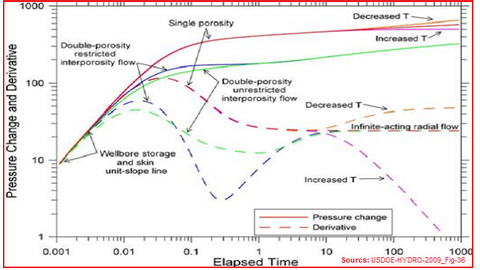
    Well Test Analysis (WTA) is a crucial reservoir engineering technique that evaluates oil/gas well performance and reservoir characteristics—such as permeability, skin factor, and reservoir boundaries—by measuring pressure, temperature, and flow rates during controlled flowing and shut-in periods. It enables better field development planning, optimizes production, and determines reservoir connectivity. 
    image
    Premium  icon
    Download

    Hydraulic Fracturing

    Hydraulic fracturing, or fracking, is a technique to extract oil and gas from deep rock (shale) by injecting high-pressure fluid (water, sand, chemicals) to create fractures, allowing hydrocarbons to flow to a well.
    image
    Premium  icon
    Download

    Well Stimulation

    Well stimulation is a set of techniques used in oil and gas drilling to improve fluid flow (oil, gas, water) from a reservoir to the wellbore, increasing production by enhancing the rock's permeability, often needed for tight formations like shale.
    image
    Premium  icon
    Download

    Fundamental Aspects of Waterflooding

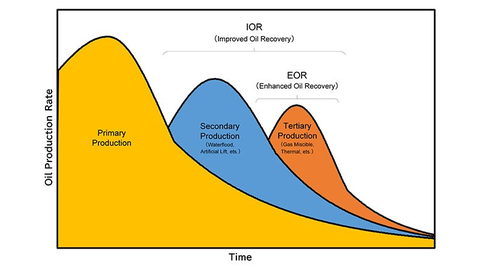
    Waterflooding fundamentally involves injecting water into an oil reservoir to maintain pressure and displace oil towards production wells, acting as a secondary recovery method due to water's low cost and effectiveness in pushing oil out.
    logo
    GET IN TOUCH

    PETROLEUM ENGINEERS ASSOCIATION
    JHARKHAND, INDIA

    Contact : +91 6205464268
    Email: info@peassociations.com

    Tax Registration Number:
    20DIGPA7260B1Z1

    COMPANY
    About Us Contact Us Articles Download Certificate
    Become an instructor One on one mentorship Gallery Testimonials Feedback
    logo
    Payment Terms Privacy Policy Terms of Use Sitemap Cookie Preferences Security
    © 2026 Petroleum Engineers Association. All Right Reserved.
    Design & Developed By Bitstreaks Company Logo
    WhatsApp Whatsapp icon
    Let us know how we can assist you? logo
    Let us know how we can assist you? ✖

    PEA uses cookies and other tracking technologies to improve your browsing experience for the following purposes: to enable basic functionality of the website, to provide a better experience on the website, to measure your interest in our products and services and to personalize marketing interactions, to deliver ads that are more relevant to you.

    Change my preferences