
Petroleum Engineers Association | Blog | How to Use Python in Oil & Gas: A Practical Guide for Modern Engineers
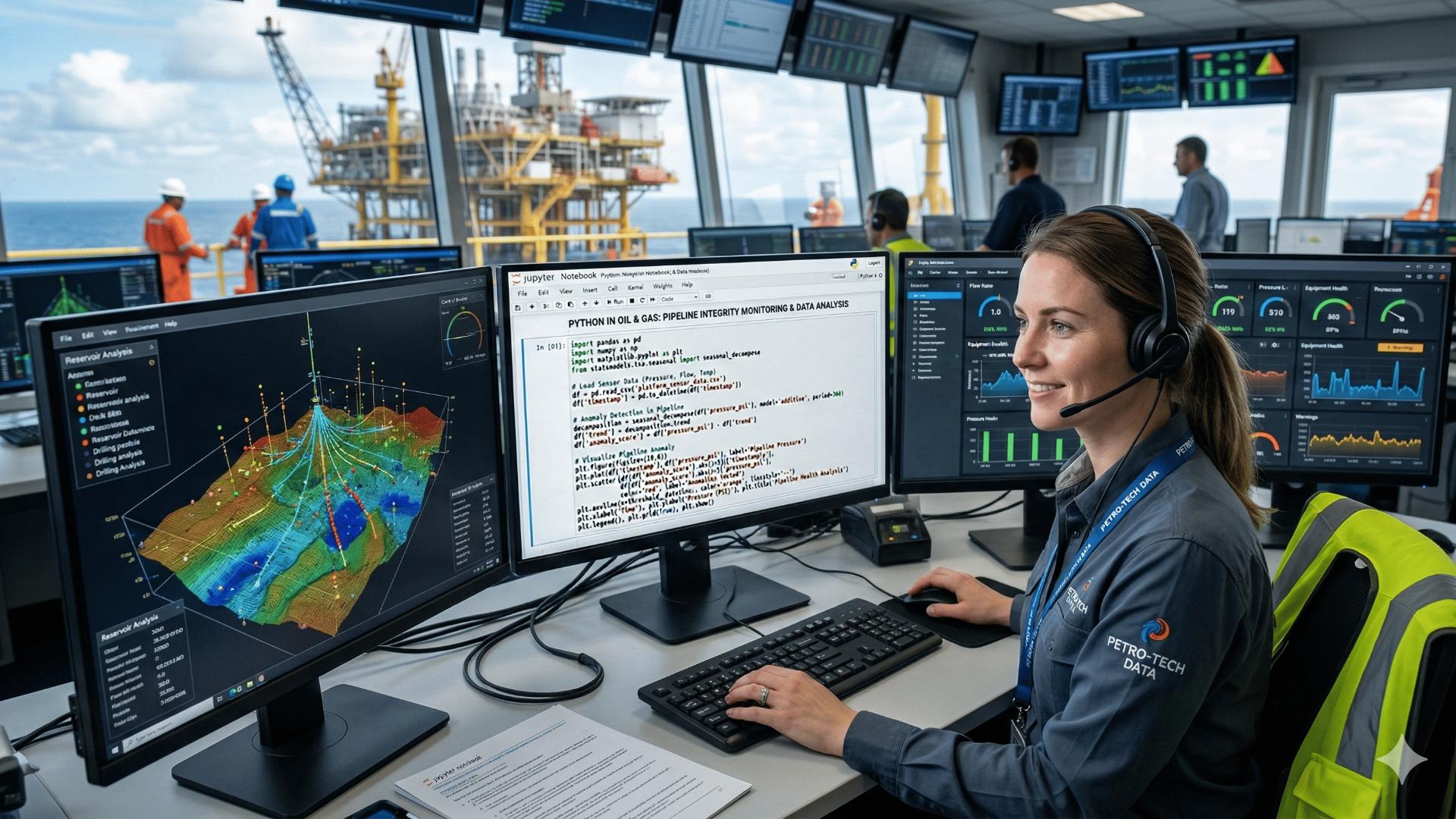
In an era of "Digital Oilfields," the ability to process massive datasets is no longer optional. While Excel has been the industry backbone for decades, Python is the engine driving the next generation of upstream and subsurface innovation.
Whether you are a Reservoir Engineer, a Drilling Specialist, or a Petrophysicist, Python offers a level of automation and precision that manual workflows simply cannot match. Here is how you can start leveraging Python in your day-to-day operations.
1. Automated Data Wrangling (LAS and CSV Files)
One of the biggest time-sinks in Oil & Gas is cleaning messy data. Python’s Pandas and Lasio libraries allow you to:
Batch Process Well Logs: Instead of opening 50 LAS files one by one, Python can scan a folder, extract specific curves (like Gamma Ray or Porosity), and merge them into a single dataframe in seconds.
Handle Missing Values: Automatically interpolate or flag gaps in sensor data from SCADA systems.
2. Advanced Reservoir Simulation & Decline Curve Analysis (DCA)
Moving beyond Arps' equations in a spreadsheet allows for more robust forecasting.
Automated DCA: Use Python to fit decline curves to thousands of wells simultaneously to estimate EUR (Estimated Ultimate Recovery).
Sensitivity Analysis: Run "What-if" scenarios by varying injection rates or bottom-hole pressure, visualizing the results through libraries like Matplotlib or Plotly.
3. Machine Learning for Subsurface Characterization
Python is the gateway to Artificial Intelligence in the oilfield. Engineers are now using libraries like Scikit-Learn or TensorFlow for:
Facies Classification: Training models to identify rock types from log signatures with higher accuracy than manual lithology tagging.
Synthetic Log Generation: Predicting missing sonic or density logs based on available data from neighboring wells.
4. Real-time Drilling Optimization
During drilling operations, Python can be used to analyze real-time WITSML data to:
Predict NPT (Non-Productive Time): Identify early signs of pipe sticking or lost circulation.
Optimize ROP (Rate of Penetration): Analyze the relationship between weight-on-bit and RPM to find the "sweet spot" for faster drilling.
Why Should You Switch from Excel to Python?
How to Get Started
You don’t need to be a software developer to use Python in Petroleum Engineering. Focus on the "Big Three" libraries first:
NumPy: For complex mathematical calculations.
Pandas: For managing tabular well data.
Matplotlib/Seaborn: For creating professional-grade geological plots.
The Bottom Line: Python is the bridge between traditional engineering and the future of energy. By automating the mundane, you free up your time for what really matters: making data-driven decisions that optimize production and reduce costs.
Related Blogs:
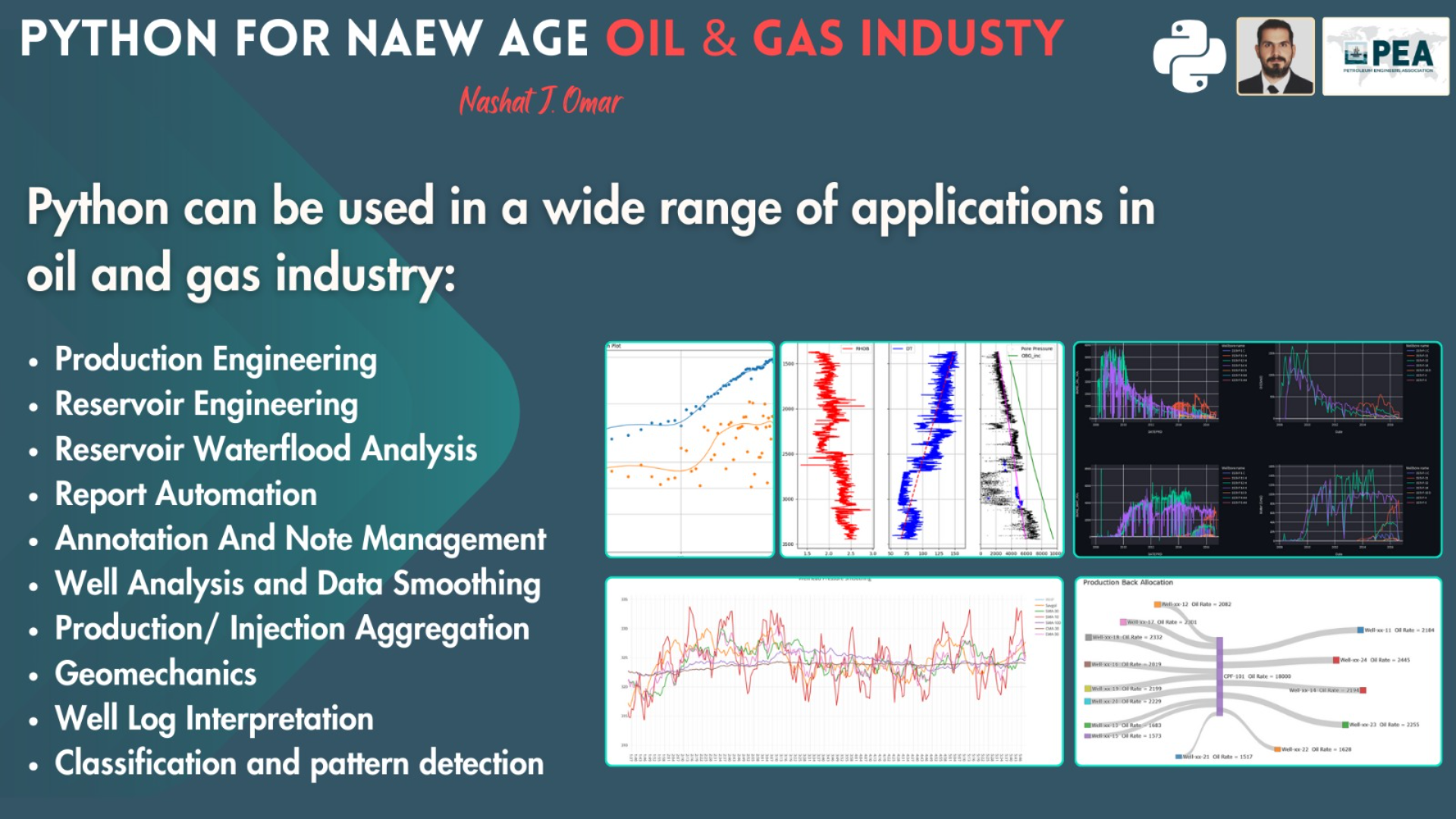
- Digital Oilfield & Industry 4.0
- 28th February, 2026
Python in Oil & Gas: The Digital Fuel for 2026 Operations
Digital transformation is no longer a "nice-to-have" in the energy sector; it is the ...

Leave a comment on this Blog/Article.