
Petroleum Engineers Association | Blog | Python in Oil & Gas: The Digital Fuel for 2026 Operations
Digital transformation is no longer a "nice-to-have" in the energy sector; it is the engine of 2026 operations. For oil and gas professionals, Python has evolved from a niche tool for data scientists into a core competency for engineers.
Here is a structured blog article designed for your website to help your audience understand why and how to integrate Python into their workflows.
Python in Oil & Gas: The Digital Fuel for 2026 Operations
The oil and gas industry has always been data-rich, but often "insight-poor." In 2026, the competitive edge belongs to those who can process massive datasets—from seismic sensors to real-time production meters—with speed and precision.
Python has emerged as the industry-standard language to bridge this gap. Whether you are in Upstream, Midstream, or Downstream, here is how Python is reshaping the energy landscape.
1. Why Python? The "Swiss Army Knife" of Energy
Unlike complex legacy software that acts as a "black box," Python is open, flexible, and supported by a massive global community.
Ease of Use: Its readable syntax allows engineers to focus on solving physics and math problems rather than fighting with code.
The Ecosystem: Libraries like Pandas for data manipulation, NumPy for numerical calculations, and Matplotlib/Plotly for 3D visualization are tailor-made for engineering data.
2. Key Applications Across the Value Chain
A. Upstream: Subsurface & Reservoir Engineering
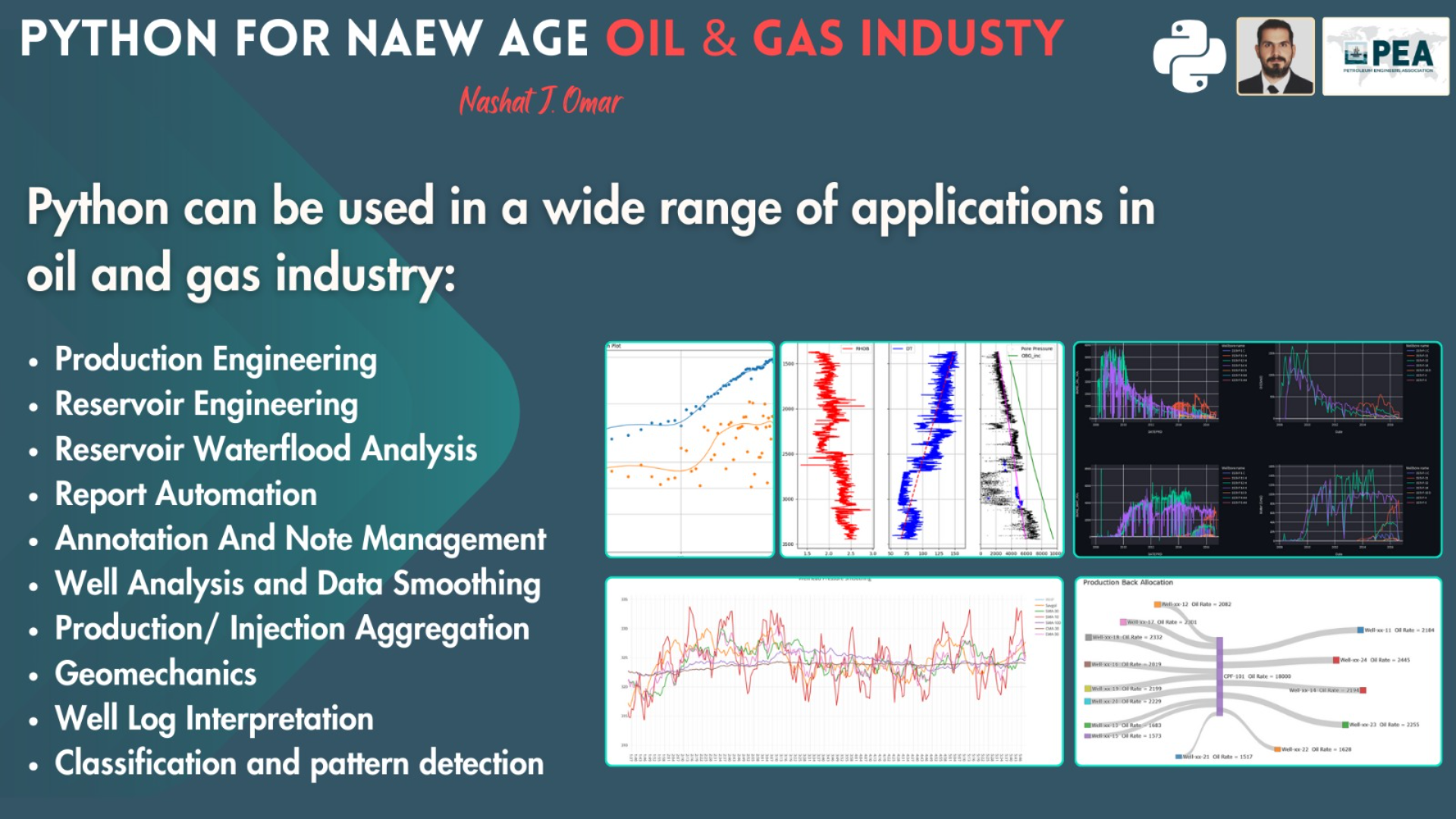
Python is revolutionizing how we understand what lies beneath the surface:
Automated Well Log Analysis: Use libraries like Lasio or Welly to process thousands of .LAS files in seconds, identifying pay zones and lithology automatically.
Decline Curve Analysis (DCA): Automate production forecasting and Estimated Ultimate Recovery (EUR) calculations using regression models that outperform manual "best-fit" methods.
Reservoir Simulation: Build custom scripts to automate sensitivity analysis, running hundreds of simulation cases to find the optimal well spacing.
B. Midstream: Pipeline Integrity & Logistics
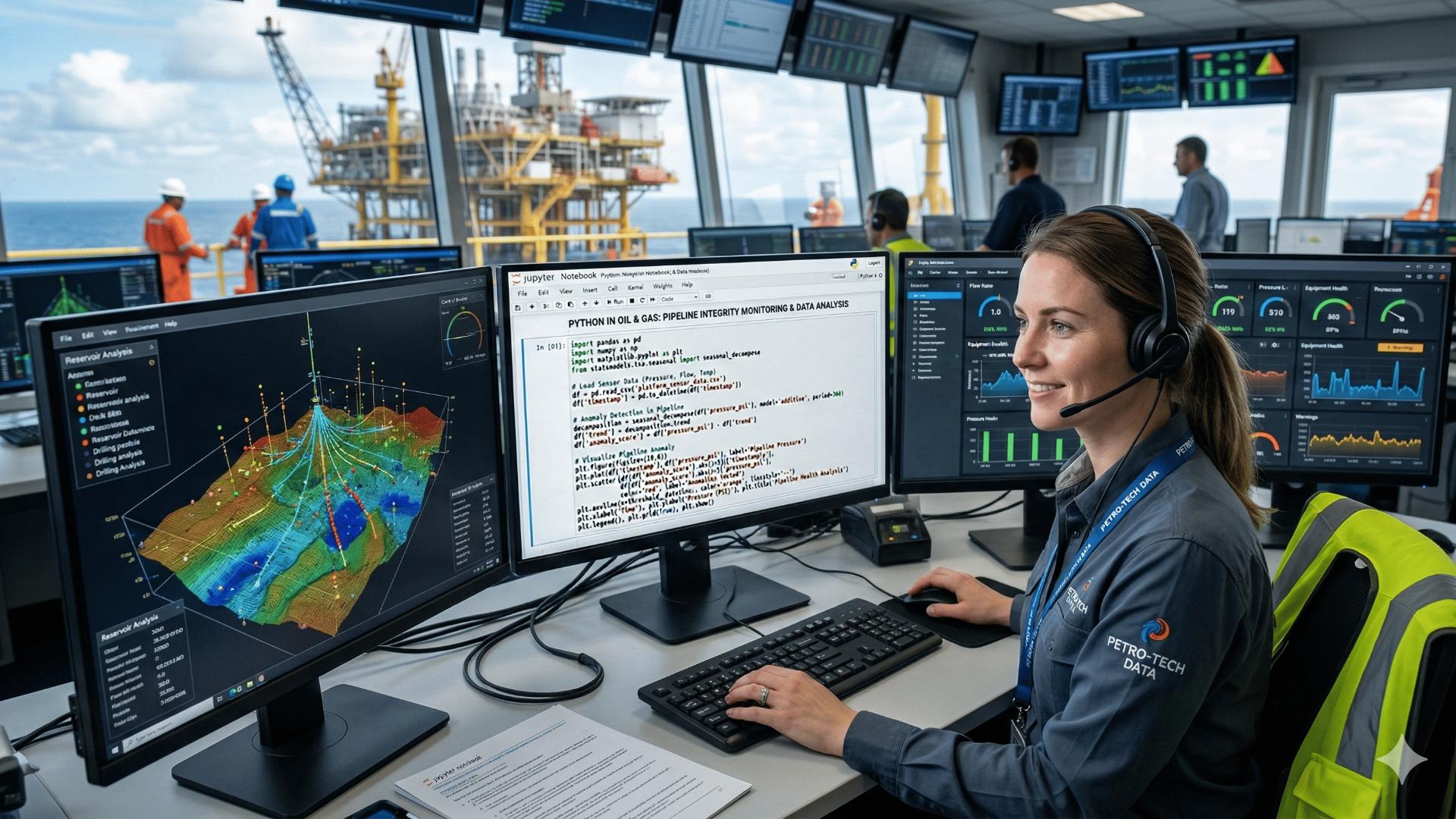
Leak Detection: Machine learning models built in Python can analyze pressure and flow rate data in real-time to detect anomalies that signify a leak before it becomes a disaster.
Flow Assurance: Use Python to calculate pressure drops and multiphase flow correlations (like Beggs and Brill) to ensure steady transport.
C. Downstream: Refining & Maintenance
Predictive Maintenance: Analyze vibration and temperature data from turbines and pumps to predict equipment failure weeks in advance, saving millions in unplanned downtime.
Supply Chain Optimization: Use Python’s optimization libraries to find the most cost-effective blending and distribution routes for refined products.
3. Top 5 Python Libraries Every Petroleum Engineer Needs
If you’re starting your journey, these are your "Big Five":
4. How to Transition from Excel to Python
Most engineers are comfortable with Excel, but Excel has limits—it crashes with large datasets and makes "reproducible" workflows difficult.
Start with Automation: Identify a task you do every week (like a weekly production report) and try to automate it using the Openpyxl or Pandas libraries.
Use Jupyter Notebooks: These allow you to combine code, equations, and visualizations in one document, making it easy to share your findings with non-technical managers.
Learn by Doing: Don't just watch videos. Take a real dataset from your field and try to visualize it in Python.
The Path Forward
In 2026, the role of a Petroleum Engineer is shifting. We are no longer just "engineers"—we are "data-driven decision makers." Learning Python isn't about becoming a software developer; it’s about having the best tool available to maximize recovery and minimize risk.
Ready to level up your skills?
At Petroleum Engineers Association (PEA), we offer hands-on workshops specifically designed for the energy sector. From "Applied Machine Learning for Subsurface" to "Python for Reservoir Engineering," we help you bridge the gap between traditional engineering and the digital future.
Related Blogs:
- Digital Oilfield & Industry 4.0
- 28th February, 2026
How to Use Python in Oil & Gas: A Practical Guide for Modern Engineers
In an era of "Digital Oilfields," the ability to process massive datasets is no longe...

Leave a comment on this Blog/Article.