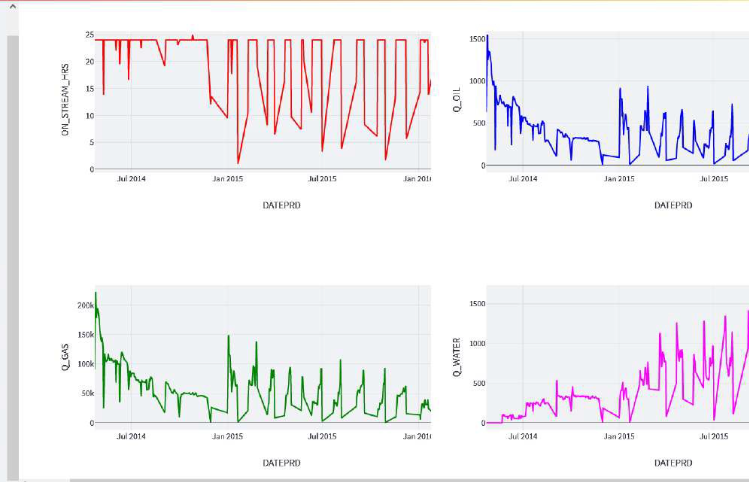

Apply Python to Real Reservoir Data
Reservoir Engineering with Python
A self-paced e-learning course for engineers who want practical Python skills for reservoir analysis, surveillance, and forecasting — taught using real oil and gas datasets.



Reservoir Engineering with Python
Have Questions ?
Reservoir Engineering with Python - PEA-EL-RES-101
| Code | Duration | Currency | Fee Per Person |
|---|---|---|---|
| PEA-EL-RES-101 |
10 Hours
|
USD
|
600
|
This is a self-paced, on-demand e-learning course. Upon enrollment, all course videos will be delivered to your email within 12 hours. A certificate will be issued upon successful completion of the required quizzes and assignments.
Boost your team's skills and your budget! Enjoy group discounts for collaborative learning. Send an inquiry to info@peassociations.com.
Reservoir Engineering with Python
A self-paced e-learning course that teaches reservoir engineers how to use Python for data handling, dashboards, surveillance, material balance, and statistical workflows. Built around real oil and gas datasets. No prior Python experience needed.
Description
This course shows you how to use Python for everyday reservoir engineering work. You start from the basics — reading data, cleaning it, plotting it — and build up to interactive dashboards, water cut diagnostics, production forecasting, material balance, PVT calculations, and Monte Carlo simulation.
Every topic is taught using real oil and gas datasets. You learn the Python syntax and the engineering workflow at the same time, so the skills are usable in your own work from day one.
The course is fully on-demand. You get video recordings and the datasets used in each lesson, and you progress at your own pace.
Reservoir engineering work involves large volumes of data — well histories, production records, PVT properties, pressure surveys, and field maps. Python lets you handle this data faster than spreadsheets, automate repeat tasks, and produce cleaner reports.
This course is for working engineers who want a practical entry point into Python without sitting through generic programming tutorials. Every example, exercise, and dataset comes from the oil and gas industry.
By the end of this course, you will be able to:
Set up a working Python environment for reservoir engineering tasks
Read, clean, and transform oil and gas data using Pandas
Build static and interactive plots for reservoir data
Create dashboards that combine well selection, KPIs, and maps
Apply Chan plots, WOR analysis, and time series methods for surveillance
Carry out flowing material balance and linear production forecasting
Connect Python to a tank model and run controlled simulations
Calculate PVT properties and produce tabular reports
Run Monte Carlo simulations for IOIP and reserves estimation
Apply Pareto and control chart methods to classify well performance
This is a self-paced e-learning course. You get on-demand video recordings and the oil and gas datasets used in every lesson. Each module follows the same structure: short theory, code walkthrough, and a guided exercise on real field data.
You can revisit recordings as often as you need and work through the material at your own pace. Free Python tools and libraries are recommended for setup; no commercial software is required to follow along.
Faster turnaround on reservoir data analysis
Standard, reproducible workflows for surveillance and reporting
Better decision support through interactive dashboards
Reduced dependence on expensive licensed tools for routine tasks
Stronger in-house capability for production forecasting and reserves estimation
Learn Python from scratch using oil and gas data, not generic examples
Read, clean, and analyze well and production data on your own
Build interactive dashboards for reservoir monitoring
Forecast production and diagnose water cut behavior with confidence
Run Monte Carlo simulations for reserves estimation
Add a practical, transferable skill to your engineering profile
Reservoir engineers
Production engineers
Drilling engineers
Chemical engineers
Geologists and petrophysicists
Artificial lift and workover engineers
Petroleum engineering students
No prior Python knowledge is required. A working laptop with Windows is recommended.
Module 1 — Python Foundations for Reservoir Engineers
Why Python for reservoir work. Data types and structures. Reading Excel, CSV, and TXT files. Pandas for tabulated data. Cleaning, filtering, and transforming well and production data. Datetime handling. Calculations and exports.
Module 2 — Reservoir Data Visualization and Dashboards
Static and interactive plots. Subsurface contour mapping. Delaunay triangulation. Building interactive dashboards with well selection and dynamic filters. KPI and metric displays. Bubble maps for drainage extent. Identifying undeveloped reservoir areas.
Module 3 — Reservoir Surveillance and Forecasting
Time series analysis using auto regression. Water cut and WOR prediction. Chan plot for water-oil ratio diagnostics. X plot. Flowing material balance and recovery estimation. Linear and non-linear curve fitting. Linear production forecasting.
Module 4 — Material Balance and 1D Simulation with Python
Connecting a reservoir tank model to Python. Controlling tank simulations from code. Production schedule control. Well performance evaluation through numerical simulation. PVT property calculation, tabular reporting, and plotting.
Module 5 — Statistics for Reservoir Engineers
NumPy basics. Random data generation. Statistical distributions. Pareto principle and 80/20 well analysis. Control charts for well performance classification. Monte Carlo simulation for IOIP. Histograms. Production data aggregation by month and year.
On successful completion of this training course, PEA Certificate will be awarded to the delegates.
This course has been meticulously developed by a seasoned PEA expert renowned in the oil and gas industry. With extensive hands-on experience and a proven track record in delivering innovative solutions, our trainer brings a wealth of technical expertise, deep industry insight, and a commitment to excellence. Learners can trust that they are gaining knowledge from a leading authority whose dedication to professional development ensures you receive only the highest-quality training to elevate your skills and career prospects.