Advanced Well, Reservoir and Facilities Management (WRFM)
Premium Workshop
For PEA Members Only

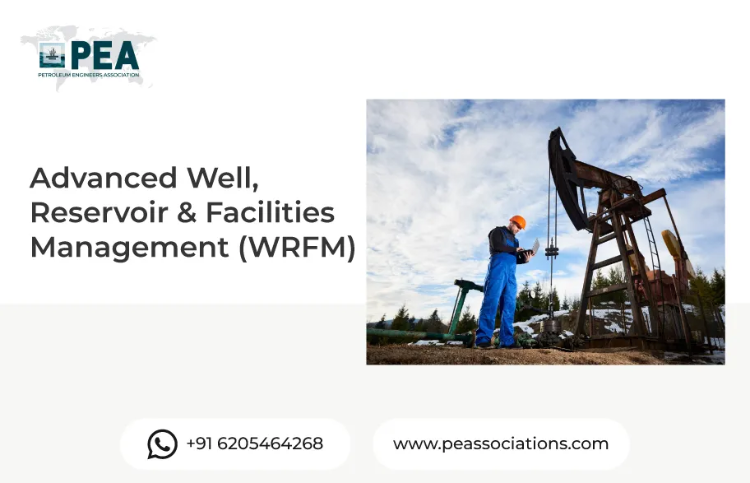
A focused, practice-led program on integrating subsurface, wells, and facilities to lift production, improve recovery, and protect asset value. Participants use real field cases to diagnose constraints, rank opportunities, and implement closed-loop optimization aligned with company standards.
Workshop Objectives
• Build an integrated WRFM workflow linking reservoir, wellbore, and surface network models
• Diagnose production losses using nodal analysis, loss accounting, and structured root-cause methods
• Prioritize surveillance, workovers, artificial lift, and debottlenecking by risk, value, and execution readiness
• Optimize networks and facilities for pressure, capacity, flow assurance, and energy performance with KPIs for sustainment
About the Presenter
Delivered by a senior oil and gas practitioner with cross-disciplinary experience in reservoir engineering, production technology, and facilities optimization. Instruction emphasizes proven WRFM practices, decision-quality analysis, and practical tools that enable teams to progress from diagnosis to sustained performance improvement.








Premium Workshop
For PEA Members Only
Excel in Production Engineering
Most production engineering calculations don't need expensive software — they need Excel used well. This live 2-hour beginner workshop shows you how to build the core tools of well performance analysis directly in a spreadsheet. You'll create working models for inflow performance, nodal analysis, and decline curves from scratch, using nothing but Microsoft Excel — so you understand what's happening under the hood instead of treating commercial software as a black box.