Basic Refinery Operations
Premium Workshop
For PEA Members Only

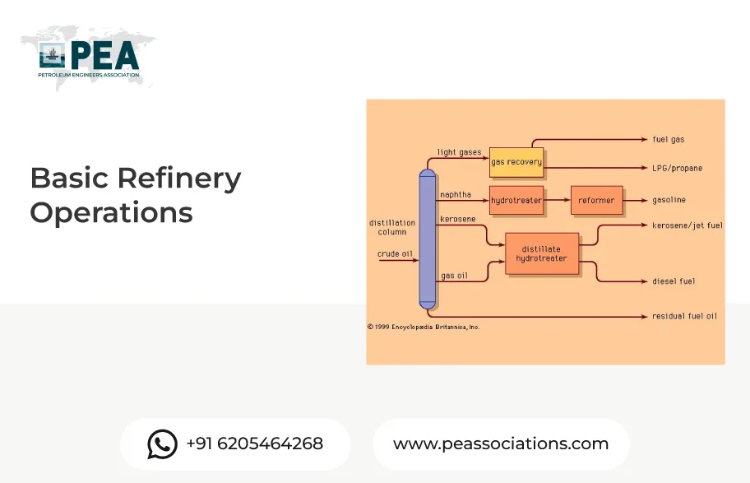
This workshop provides a practical overview of refinery operations, focusing on the fundamental processes that convert crude oil into marketable products. Participants will gain insight into refining workflows, key unit operations, and the integration of safety, efficiency, and environmental considerations within refinery systems.
Workshop Objectives
• Understand the overall structure and flow of refinery operations.
• Identify key process units and their functions in crude oil refining.
• Recognize operational challenges and best practices for safe, efficient performance.
• Develop a foundational perspective to support advanced technical training in downstream operations.
About the Presenter
The workshop is led by an experienced industry professional in oil and gas operations and training. With a strong background in refinery processes, safety management, and performance optimization, the presenter brings practical knowledge and proven methodologies to enhance participant learning. The sessions are designed to blend technical insight with real-world application, ensuring relevance for professionals at various stages of their careers.







Premium Workshop
For PEA Members Only
Excel in Production Engineering
Most production engineering calculations don't need expensive software — they need Excel used well. This live 2-hour beginner workshop shows you how to build the core tools of well performance analysis directly in a spreadsheet. You'll create working models for inflow performance, nodal analysis, and decline curves from scratch, using nothing but Microsoft Excel — so you understand what's happening under the hood instead of treating commercial software as a black box.