
Basic Seismic Processing
Premium Workshop
For PEA Members Only

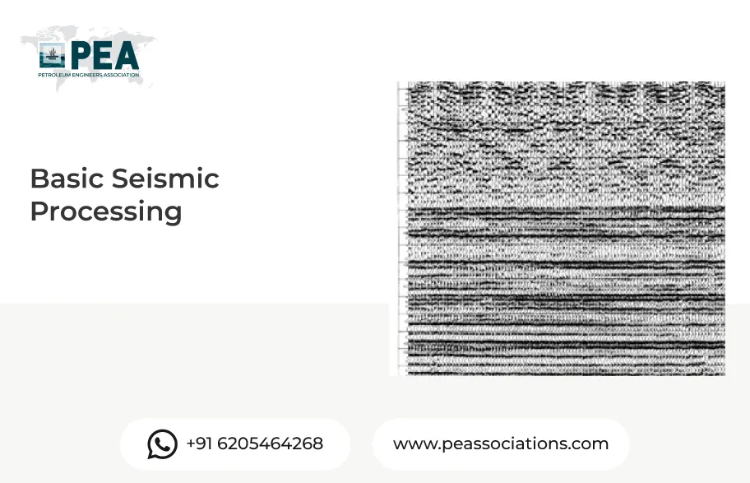
This workshop introduces the fundamentals of seismic data processing, providing participants with a structured understanding of the key steps involved in transforming field data into usable seismic images. The course emphasizes essential workflows, quality control practices, and the role of processing in supporting accurate seismic interpretation.
Workshop Objectives
• Understand the fundamental principles of seismic data processing.
• Learn the standard processing sequence from field data to final stack.
• Recognize common challenges and quality control measures in seismic workflows.
• Build a foundation for advancing into more specialized or advanced seismic processing techniques.
About the Presenter
The workshop is delivered by an industry professional with experience in seismic data acquisition, processing, and interpretation. Combining technical with practical insights, the presenter provides participants with a clear understanding of both fundamental concepts and their real-world applications.







Premium Workshop
For PEA Members Only
Machine Learning for Drilling Engineering with Python
Drilling generates huge amounts of data — but most of it sits unused. This hands-on workshop shows you how to turn that data into better decisions using Python and machine learning.Over the sessions, you'll work with real drilling datasets to build models that predict problems before they happen — stuck pipe, ROP optimization, bit wear, formation changes, and more. No heavy math theory. You write code, run it on actual data, and see the results.By the end, you'll have working Python scripts you can adapt to your own field data, plus a clear understanding of where ML adds value in drilling and where it doesn't.Built for drilling engineers, not data scientists. If you can read a drilling report, you can follow this course.