Brownfield Site Restoration and Remediation
Premium Workshop
For PEA Members Only

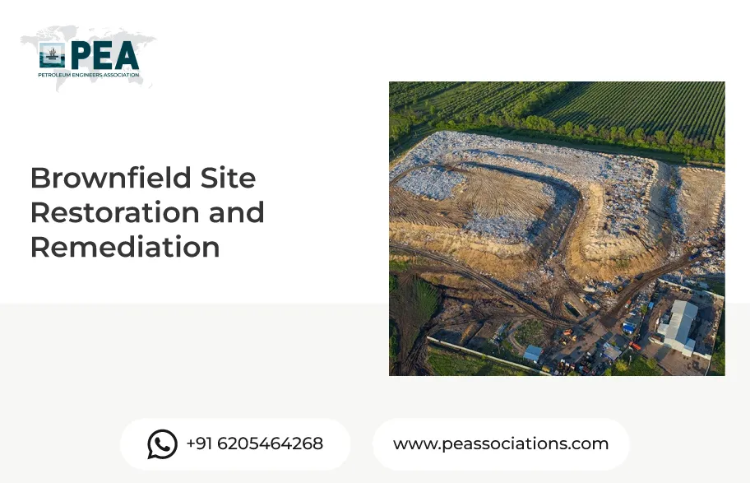
This workshop addresses the technical, regulatory, and environmental aspects of restoring and remediating brownfield sites in the oil and gas sector. Participants will explore proven methods and innovative technologies for site assessment, contamination control, remediation planning, and sustainable redevelopment, ensuring compliance with environmental standards while maximizing asset value.
Workshop Objectives
• By the end of this workshop, participants will be able to:
• Understand regulatory frameworks and industry guidelines for brownfield remediation.
• Conduct effective site investigations and risk assessments.
• Apply remediation techniques for soil, groundwater, and surface contamination.
• Develop sustainable restoration strategies that balance cost, safety, and environmental performance.
About the Presenter
The workshop is led by an environmental and engineering professional with experience in brownfield site management and remediation. With a strong background in assessment, restoration, and regulatory compliance, the presenter shares real-world case studies and best practices to equip participants with practical, actionable knowledge.








Premium Workshop
For PEA Members Only
Excel in Production Engineering
Most production engineering calculations don't need expensive software — they need Excel used well. This live 2-hour beginner workshop shows you how to build the core tools of well performance analysis directly in a spreadsheet. You'll create working models for inflow performance, nodal analysis, and decline curves from scratch, using nothing but Microsoft Excel — so you understand what's happening under the hood instead of treating commercial software as a black box.