Deep Learning, Scientific Machine Learning and AI for Reservoir & Production Engineering
Premium Workshop
For PEA Members Only

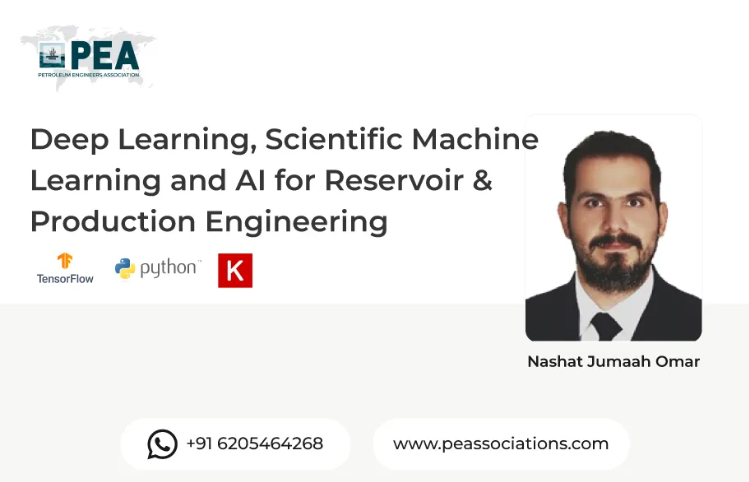
Deep Learning, Scientific Machine Learning and AI for Reservoir & Production Engineering is an advanced workshop designed for petroleum professionals who want to explore modern AI-driven methods for solving complex subsurface problems. The workshop focuses on the practical use of deep learning, scientific machine learning, and artificial intelligence in reservoir and production engineering workflows, with emphasis on real-world engineering applications rather than theory alone.
All content in this session is copyrighted by Mr. Nashat. Access to recordings, slides, and the Excel workbook is provided exclusively through this platform. Any unauthorized use, reproduction, or distribution outside the portal is strictly prohibited and may result in legal action under applicable laws.
Recordings, data sets, and certificates will be provided within one business day after the event is completed.
Workshop Objectives
By the end of this workshop, participants will be able to:
Understand the core concepts of deep learning, scientific machine learning, and AI in the context of reservoir and production engineering.
Identify practical use cases where AI methods can improve subsurface analysis and decision-making.
Recognize how Python-based tools such as TensorFlow and Keras support AI workflows in engineering applications.
Explore how AI techniques can be applied to reservoir modeling, production forecasting, and related engineering problems.
Build a clearer understanding of how modern machine learning approaches can support faster and more efficient engineering workflows.
About the Presenter
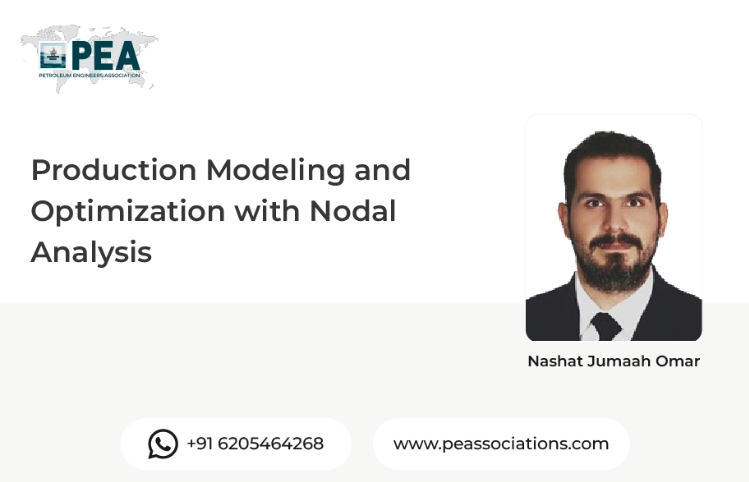
Nashat Jumaah Omar is a production engineer, instructor, and technical consultant with over 11 years of experience in the oil and gas industry, with particular depth in production engineering, flow assurance, subsurface workflows, and engineering data applications. His work combines petroleum engineering knowledge with practical use of digital tools such as Python, SQL, Power BI, C#, FORTRAN, and VBA to improve analysis, automate repetitive tasks, and support more efficient engineering workflows.
Over the course of his career, he has worked across production operations, well and network modeling, flow assurance, production data management, and software-enabled engineering solutions, including experience with platforms such as PIPESIM, PROSPER, OLGA, and OFM. His professional background also includes training and mentoring engineers in Python, machine learning, data analytics, and applied digital workflows for upstream oil and gas environments.
At Petroleum Engineers Association, he has contributed to the design and delivery of technical training programs for petroleum professionals, including courses in Python for petroleum engineering, machine learning, data analysis, and production and reservoir applications. His teaching style is grounded in real industry use cases, with an emphasis on helping participants translate coding and analytics concepts into practical tools for day-to-day engineering work.




Premium Workshop
For PEA Members Only
Machine Learning for Drilling Engineering with Python
Drilling generates huge amounts of data — but most of it sits unused. This hands-on workshop shows you how to turn that data into better decisions using Python and machine learning.Over the sessions, you'll work with real drilling datasets to build models that predict problems before they happen — stuck pipe, ROP optimization, bit wear, formation changes, and more. No heavy math theory. You write code, run it on actual data, and see the results.By the end, you'll have working Python scripts you can adapt to your own field data, plus a clear understanding of where ML adds value in drilling and where it doesn't.Built for drilling engineers, not data scientists. If you can read a drilling report, you can follow this course.