
Directional, Horizontal and Multilateral Drilling
Premium Workshop
For PEA Members Only

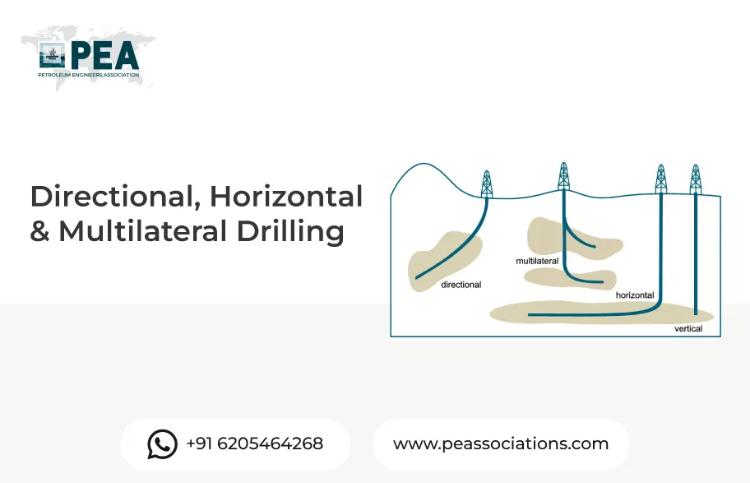
This workshop covers the fundamental concepts and practical applications of directional, horizontal, and multilateral drilling. Participants will explore well trajectory planning, bottom hole assembly (BHA) design, and drilling operations management to enhance well placement accuracy and production efficiency. The session emphasizes operational planning, execution, and challenges encountered in complex well architectures.
Workshop Objectives
• Understand the principles and techniques of directional, horizontal, and multilateral drilling.
• Learn the key steps in trajectory design and BHA configuration.
• Identify operational challenges and mitigation strategies during drilling.
• Review best practices for optimizing drilling performance and well productivity.
About the Presenter
The workshop is conducted by a seasoned industry professional with a strong background in drilling operations, well engineering, and project execution. The presenter shares practical field insights and proven techniques applied across diverse drilling environments to support effective learning and skill development.




Premium Workshop
For PEA Members Only
Reservoir Engineering & Well Testing in Excel The Hands-On Bootcamp
This hands-on bootcamp is designed for petroleum engineers who want to move beyond theory and actually build reservoir engineering and well testing models from scratch — in Microsoft Excel. Over two intensive days, participants work through 10 real-world projects covering the full spectrum of reservoir characterisation and well performance analysis. No black boxes, no third-party software — every model is built cell by cell, so you understand exactly what's happening under the hood. Exclusively available to PEA Members.