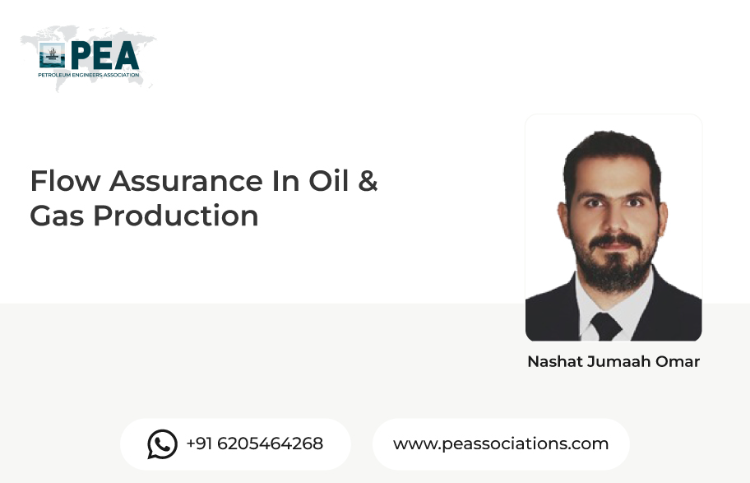
Flow Assurance in Oil & Gas Production
Premium Workshop
For PEA Members Only

Workshop Objectives
Understand the fundamentals of flow assurance and its significance in oil & gas production.
Identify common flow assurance challenges including hydrates, wax, scale, and corrosion.
Learn methods for diagnosing and mitigating flow assurance problems in pipelines and production facilities.
Explore best practices and the latest technologies for ensuring safe and reliable flow in oil & gas operations.
Develop strategies for proactive flow assurance management to minimize downtime and production losses.
About the Presenter
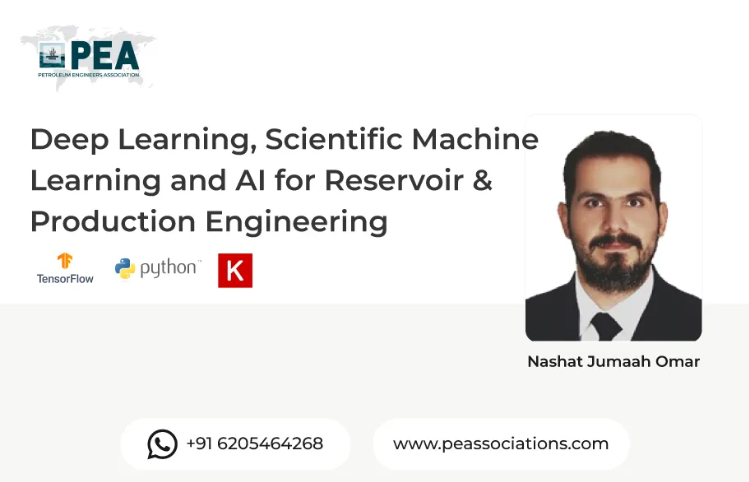
Mr. Nashat J. Omar With over 11 years of specialized experience in petroleum engineering, focus on production and flow assurance brings valuable expertise to the energy sector. He possess a strong command of Python and C#, which empowers him to create efficient data management solutions and streamline workflows. His collaborative nature and adaptability enable him to thrive in multidisciplinary settings, where he consistently contribute to success through innovative problem-solving. He is dedicated to continuous learning and staying ahead of industry advancements, ensuring that he can enhance operational





Premium Workshop
For PEA Members Only
Reservoir Engineering & Well Testing in Excel The Hands-On Bootcamp
This hands-on bootcamp is designed for petroleum engineers who want to move beyond theory and actually build reservoir engineering and well testing models from scratch — in Microsoft Excel. Over two intensive days, participants work through 10 real-world projects covering the full spectrum of reservoir characterisation and well performance analysis. No black boxes, no third-party software — every model is built cell by cell, so you understand exactly what's happening under the hood. Exclusively available to PEA Members.