Fluid Separation and Treatment
Premium Workshop
For PEA Members Only

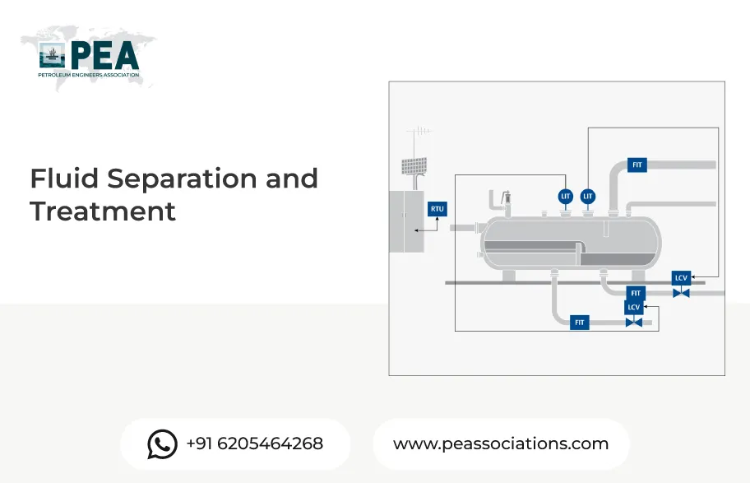
This workshop provides an overview of fluid separation and treatment processes critical to oil and gas production operations. Participants will explore the principles and technologies used to separate oil, gas, and water phases, with emphasis on equipment design, process efficiency, and environmental compliance.
Workshop Objectives
• Understand the fundamentals of multiphase fluid separation.
• Learn the design and operation of separators and treatment systems.
• Explore methods for improving efficiency and handling production challenges.
• Review environmental and regulatory considerations in produced fluid treatment.
About the Presenter
The workshop is conducted by a production engineering professional with extensive experience in surface facilities, separation technologies, and production optimization. The presenter combines technical expertise with field-based knowledge to deliver both conceptual understanding and practical applications.




Premium Workshop
For PEA Members Only
Excel in Production Engineering
Most production engineering calculations don't need expensive software — they need Excel used well. This live 2-hour beginner workshop shows you how to build the core tools of well performance analysis directly in a spreadsheet. You'll create working models for inflow performance, nodal analysis, and decline curves from scratch, using nothing but Microsoft Excel — so you understand what's happening under the hood instead of treating commercial software as a black box.