

Fundamentals of Field Development Planning
Premium Workshop
For PEA Members Only

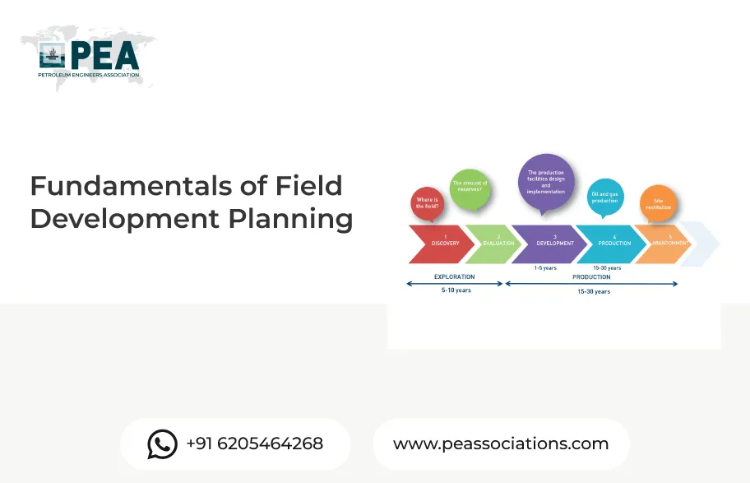
This workshop provides an introduction to the core principles of field development planning, from reservoir evaluation to production strategy. Participants will gain insight into the structured decision-making process used to design, assess, and optimize development options for maximizing value throughout a field’s life cycle.
Workshop Objectives
• Understand the stages and workflow of field development planning.
• Evaluate subsurface, surface, and economic considerations in planning.
• Assess alternative development scenarios and their risks.
• Apply integrated approaches for efficient and optimized field development.
About the Presenter
The presenter is a highly experienced petroleum industry professional in reservoir evaluation, project economics, and development planning. With a strong focus on practical application, the presenter delivers insights that link technical analysis with strategic decision-making in oil and gas projects.








Premium Workshop
For PEA Members Only
Excel in Production Engineering
Most production engineering calculations don't need expensive software — they need Excel used well. This live 2-hour beginner workshop shows you how to build the core tools of well performance analysis directly in a spreadsheet. You'll create working models for inflow performance, nodal analysis, and decline curves from scratch, using nothing but Microsoft Excel — so you understand what's happening under the hood instead of treating commercial software as a black box.