Geomechanics and Rock Mechanics for Drilling Optimization
Premium Workshop
For PEA Members Only

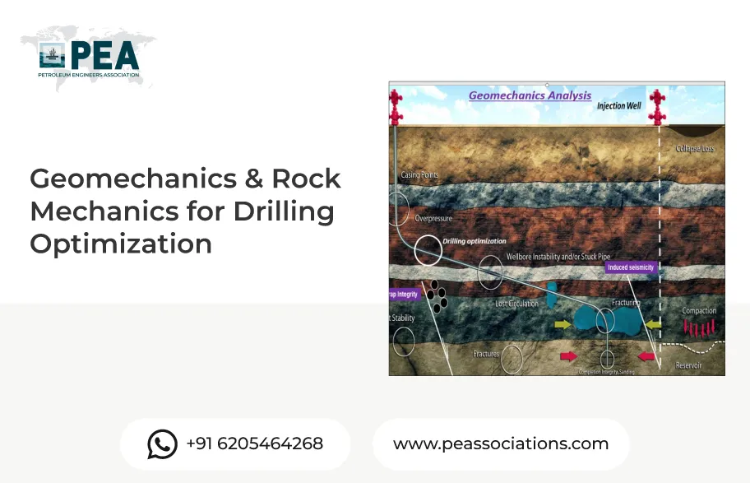
A focused program on using geomechanics to plan and execute safer, faster wells. Participants apply stress, pore pressure, and rock property models to stabilize wellbores, reduce NPT, and improve drilling performance across complex formations.
Workshop Objectives
• Build and calibrate 1D geomechanical models using logs, image data, and offset wells
• Define safe mud weight windows and trajectories to manage stability, losses, and kicks
• Optimize BHA and drilling parameters using rock strength and failure criteria
• Implement real-time surveillance to update models and prevent instability and stuck pipe
About the Presenter
Delivered by a senior geomechanics specialist with field and office experience across exploration, appraisal, and development drilling. Instruction emphasizes practical model building, defensible assumptions, and tools that translate subsurface understanding into stable, efficient well delivery.







Premium Workshop
For PEA Members Only
Excel in Production Engineering
Most production engineering calculations don't need expensive software — they need Excel used well. This live 2-hour beginner workshop shows you how to build the core tools of well performance analysis directly in a spreadsheet. You'll create working models for inflow performance, nodal analysis, and decline curves from scratch, using nothing but Microsoft Excel — so you understand what's happening under the hood instead of treating commercial software as a black box.