

Introduction to Unconventional Reservoirs
Premium Workshop
For PEA Members Only

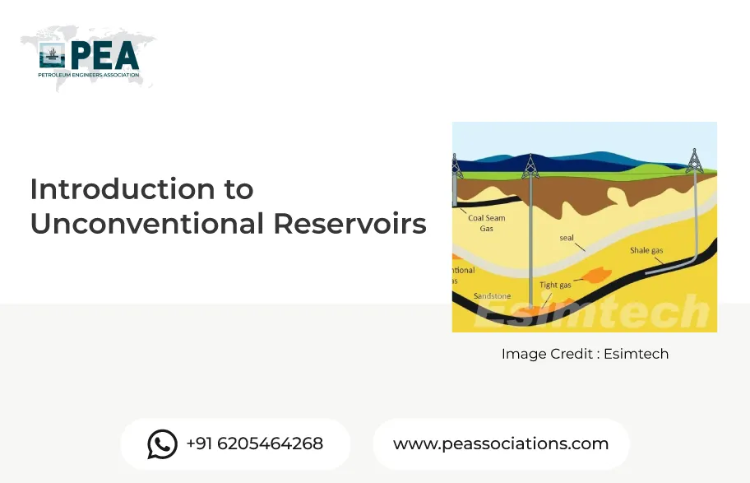
This workshop introduces the fundamentals of unconventional reservoirs, focusing on shale, tight gas, and coalbed methane formations. Participants will learn the unique characteristics of these reservoirs, the challenges they present, and the approaches used for evaluation, development, and production.
Workshop Objectives
Understand the characteristics and types of unconventional reservoirs.
Learn evaluation methods and key production challenges.
Explore techniques for reservoir development and performance optimization.
Gain insights into industry practices and technological advancements.
About the Presenter
The presenter is an experienced professional in reservoir engineering and field development, with spanning both conventional and unconventional resources. Drawing on technical knowledge and industry applications, the presenter provides practical guidance to support professional growth in this evolving domain.








Premium Workshop
For PEA Members Only
Excel in Production Engineering
Most production engineering calculations don't need expensive software — they need Excel used well. This live 2-hour beginner workshop shows you how to build the core tools of well performance analysis directly in a spreadsheet. You'll create working models for inflow performance, nodal analysis, and decline curves from scratch, using nothing but Microsoft Excel — so you understand what's happening under the hood instead of treating commercial software as a black box.