LNG Commercial Management
Premium Workshop
For PEA Members Only

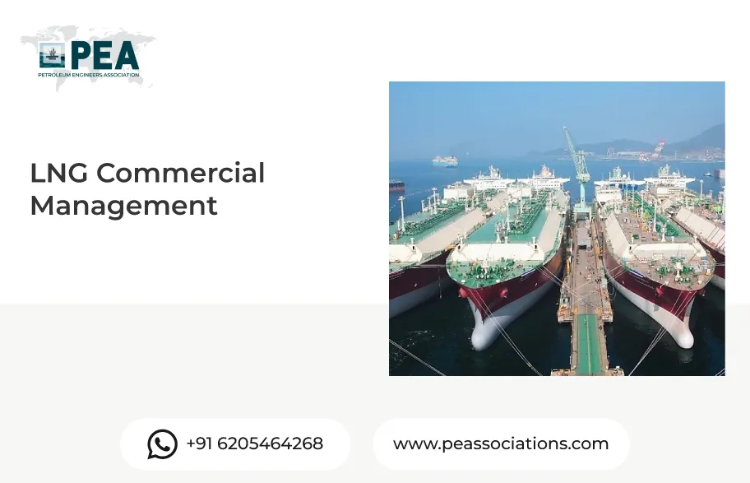
This workshop focuses on the commercial aspects of the LNG business, exploring contract structures, pricing mechanisms, risk management, and trading strategies. Participants will gain practical insights into how LNG projects and transactions are structured, negotiated, and managed to maximize value while navigating market volatility and regulatory frameworks.
Workshop Objectives
• By the end of this workshop, participants will be able to:
• Understand key LNG commercial frameworks, including SPAs, MSAs, and tolling agreements.
• Analyze LNG pricing models, benchmarks, and indexation methods.
• Evaluate risk factors and apply strategies for commercial risk management.
• Assess LNG trading practices and their impact on portfolio optimization.
About the Presenter
The workshop is delivered by an LNG commercial specialist with experience in contracts, trading, and business development. The presenter combines deep market knowledge with real-world case studies to provide participants with actionable insights into structuring and managing LNG commercial agreements.



Premium Workshop
For PEA Members Only
Excel in Production Engineering
Most production engineering calculations don't need expensive software — they need Excel used well. This live 2-hour beginner workshop shows you how to build the core tools of well performance analysis directly in a spreadsheet. You'll create working models for inflow performance, nodal analysis, and decline curves from scratch, using nothing but Microsoft Excel — so you understand what's happening under the hood instead of treating commercial software as a black box.