

Mature Field Development and Management
Premium Workshop
For PEA Members Only

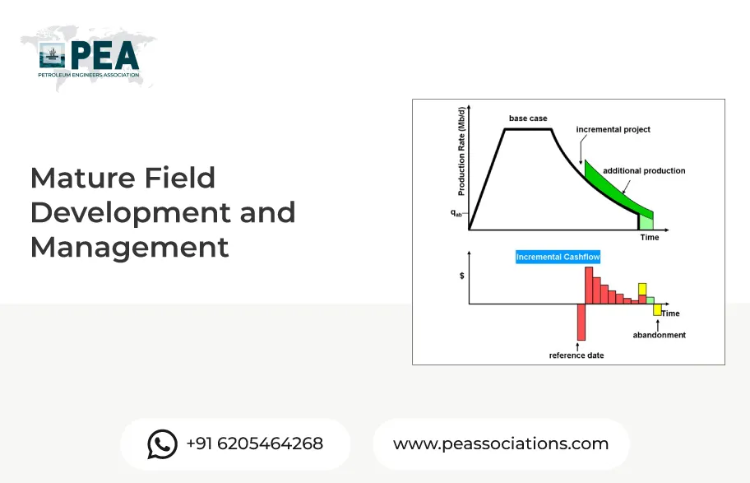
A focused, practice-led program on extracting more value from brownfield assets. Participants apply disciplined surveillance, opportunity framing, and targeted interventions to sustain production, improve recovery, and manage integrity with clear economics and risk controls.
Workshop Objectives
• Build an integrated rejuvenation plan covering reservoir surveillance, wells, lift systems, and facilities debottlenecking
• Diagnose losses using decline analysis, material balance, and loss accounting to rank opportunities with defensible value
• Plan and execute workovers, conformance control, waterflood optimization, and EOR screening with clear KPIs
• Establish governance for integrity, deferment management, and phased capital with audit-ready assumptions
About the Presenter
Delivered by a senior upstream practitioner with experience in brownfield optimization across subsurface, well interventions, and surface facilities. Instruction emphasizes proven methods, transparent calculations, and tools that enable repeatable results in complex, high-constraint environments.







Premium Workshop
For PEA Members Only
Reservoir Engineering & Well Testing in Excel The Hands-On Bootcamp
This hands-on bootcamp is designed for petroleum engineers who want to move beyond theory and actually build reservoir engineering and well testing models from scratch — in Microsoft Excel. Over two intensive days, participants work through 10 real-world projects covering the full spectrum of reservoir characterisation and well performance analysis. No black boxes, no third-party software — every model is built cell by cell, so you understand exactly what's happening under the hood. Exclusively available to PEA Members.