
Specialized Well Log Interpretation
Premium Workshop
For PEA Members Only

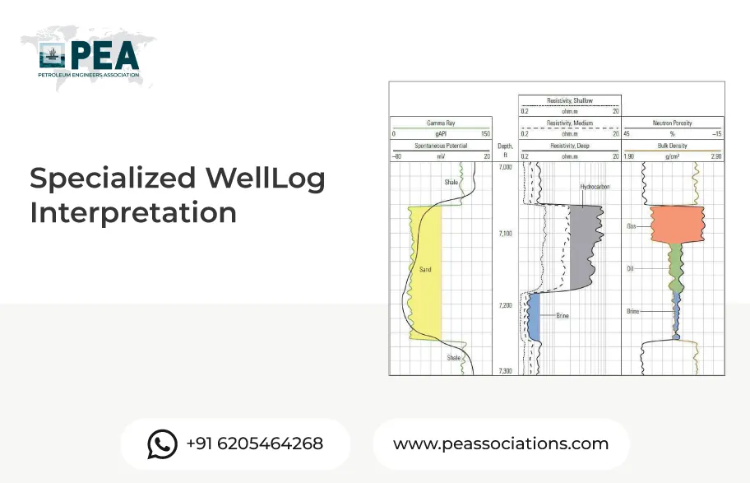
This workshop focuses on advanced techniques in specialized well log interpretation to support reservoir evaluation and development. Participants will learn how to extract detailed information on lithology, porosity, saturation, and fluid properties from specialized logs, with emphasis on integrating results into reservoir models and reducing uncertainty in decision-making.
Workshop Objectives
• Understand the principles and applications of specialized well logs.
• Interpret logs for advanced petrophysical and reservoir characterization.
• Integrate specialized log data with other subsurface information.
• Apply best practices to improve accuracy and reduce interpretation risks.
About the Presenter
The workshop is delivered by a petrophysics professional in well logging, formation evaluation, and reservoir analysis. The presenter combines technical depth with field-based insights, ensuring participants gain both advanced knowledge and practical interpretation skills.








Premium Workshop
For PEA Members Only
Excel in Production Engineering
Most production engineering calculations don't need expensive software — they need Excel used well. This live 2-hour beginner workshop shows you how to build the core tools of well performance analysis directly in a spreadsheet. You'll create working models for inflow performance, nodal analysis, and decline curves from scratch, using nothing but Microsoft Excel — so you understand what's happening under the hood instead of treating commercial software as a black box.