Subsurface Surface Production Optimization
Premium Workshop
For PEA Members Only

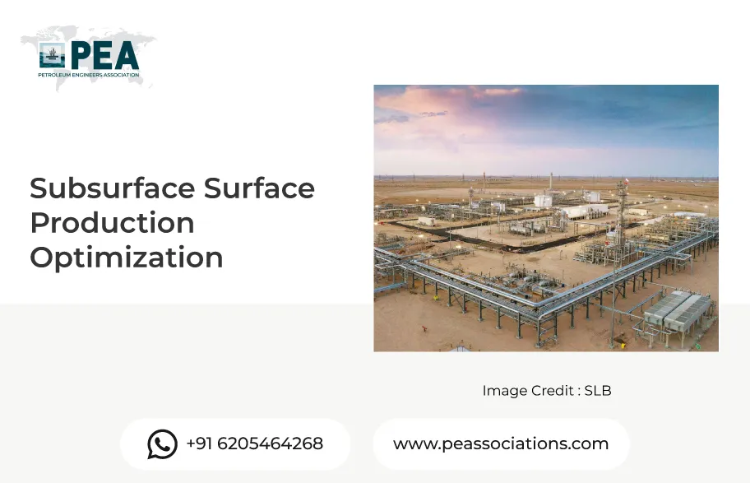
This workshop provides a practical framework for optimizing oil and gas production by integrating subsurface and surface systems. Participants will explore reservoir, well, and surface facility interactions, learning how to identify bottlenecks, improve flow performance, and maximize recovery through coordinated optimization strategies.
Workshop Objectives
By the end of this workshop, participants will be able to:
• Understand the link between reservoir performance, well deliverability, and surface facilities.
• Apply diagnostic tools and techniques to identify production constraints.
• Evaluate optimization strategies across the full production system.
• Support cost-effective production enhancement and recovery improvement.
About the Presenter
The workshop is delivered by an experienced industry professional knowledge in reservoir engineering, production technology, and surface facility operations. With a strong background in integrated production optimization, the presenter emphasizes real-world applications, enabling participants to implement strategies that drive measurable performance improvements.








Premium Workshop
For PEA Members Only
Excel in Production Engineering
Most production engineering calculations don't need expensive software — they need Excel used well. This live 2-hour beginner workshop shows you how to build the core tools of well performance analysis directly in a spreadsheet. You'll create working models for inflow performance, nodal analysis, and decline curves from scratch, using nothing but Microsoft Excel — so you understand what's happening under the hood instead of treating commercial software as a black box.