

Understanding LNG Terminals & Terminal Operations
Premium Workshop
For PEA Members Only

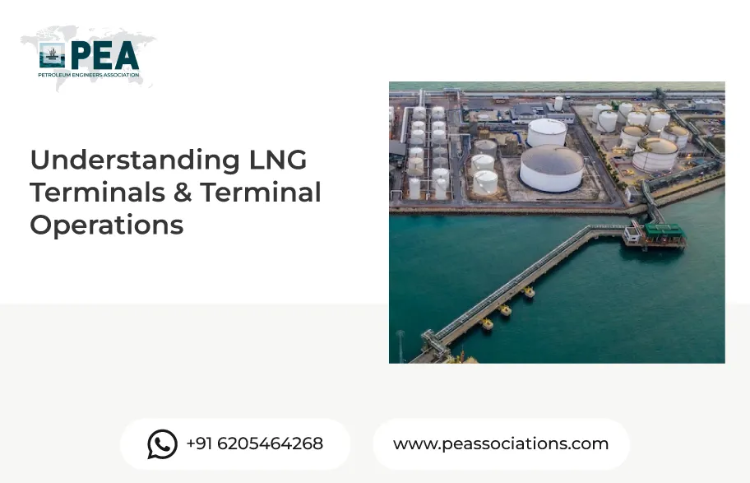
This workshop provides a practical overview of LNG terminals and their operations, covering design, infrastructure, safety systems, and day-to-day management. Participants will learn how LNG is received, stored, and regasified, as well as the commercial and operational considerations that drive terminal performance and reliability.
Workshop Objectives
• By the end of this workshop, participants will be able to:
• Understand the design and function of LNG import and export terminals.
• Explain key processes including unloading, storage, regasification, and send-out.
• Recognize operational challenges, safety systems, and risk management practices.
• Evaluate commercial and logistical factors influencing LNG terminal operations.
About the Presenter
The workshop is led by an LNG operations specialist with experience in terminal management, safety, and project development. Combining technical knowledge with real-world case studies, the presenter equips participants with actionable insights into both the technical and commercial aspects of LNG terminal operations.








Premium Workshop
For PEA Members Only
Excel in Production Engineering
Most production engineering calculations don't need expensive software — they need Excel used well. This live 2-hour beginner workshop shows you how to build the core tools of well performance analysis directly in a spreadsheet. You'll create working models for inflow performance, nodal analysis, and decline curves from scratch, using nothing but Microsoft Excel — so you understand what's happening under the hood instead of treating commercial software as a black box.