Advanced Measurement Practices and Quantity Surveying for Large Oil & Gas Projects
Premium Workshop
For PEA Members Only

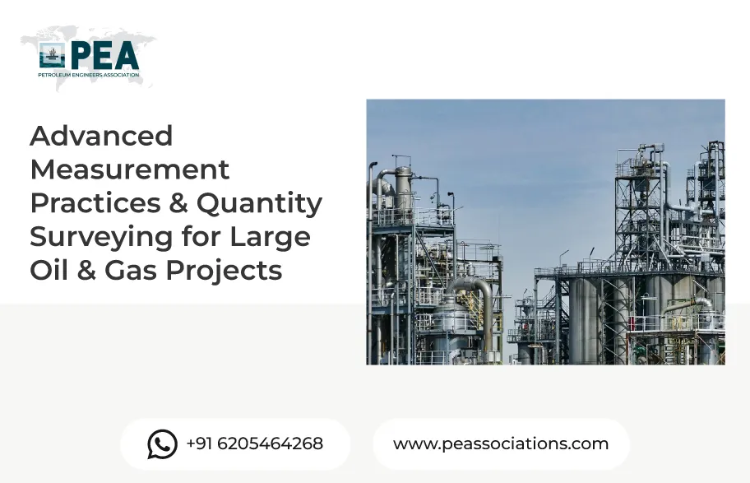
This workshop explores advanced measurement techniques and quantity surveying practices tailored for large-scale oil and gas projects. Participants will gain practical knowledge on cost estimation, contract administration, and project control methods that ensure accurate forecasting, effective resource management, and improved project delivery.
Workshop Objectives
• By the end of this workshop, participants will be able to:
• Apply advanced measurement and quantity surveying practices to complex projects.
• Develop accurate cost estimates and budgets for oil and gas facilities.
• Understand contract frameworks and their impact on project outcomes.
• Implement effective project monitoring and cost control strategies.
About the Presenter
The workshop is led by a seasoned professional in cost engineering and project controls within the oil and gas sector. With a background spanning project estimation, contract management, and financial oversight, the presenter emphasizes international best practices and real-world case applications to strengthen participants’ technical and commercial capabilities.



Premium Workshop
For PEA Members Only
Reservoir Engineering & Well Testing in Excel The Hands-On Bootcamp
This hands-on bootcamp is designed for petroleum engineers who want to move beyond theory and actually build reservoir engineering and well testing models from scratch — in Microsoft Excel. Over two intensive days, participants work through 10 real-world projects covering the full spectrum of reservoir characterisation and well performance analysis. No black boxes, no third-party software — every model is built cell by cell, so you understand exactly what's happening under the hood. Exclusively available to PEA Members.