
Geomechanics for well engineers
Premium Workshop
For PEA Members Only

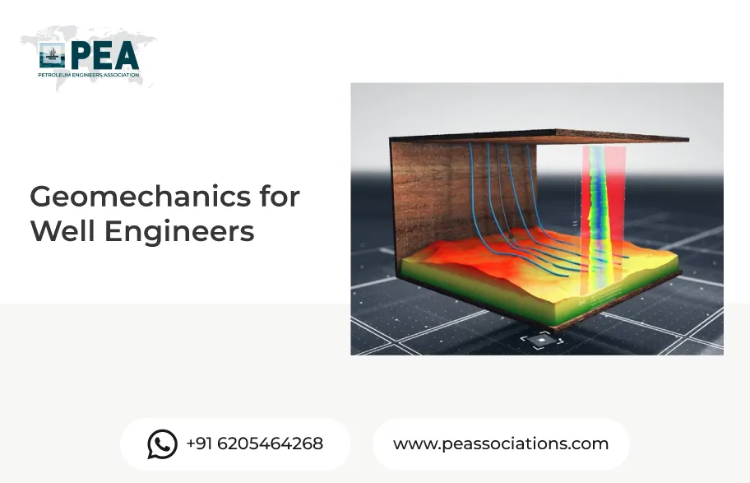
This workshop introduces the key principles of geomechanics essential for well design, drilling, and completion. Participants will learn how to evaluate in-situ stresses, pore pressure, and rock properties to prevent wellbore instability, sanding, and fracturing issues. The session focuses on practical applications of geomechanical models to support safer and more efficient drilling and production operations.
Workshop Objectives
• Understand the fundamental concepts of rock mechanics and in-situ stresses.
• Learn methods for predicting pore pressure and fracture gradients.
• Analyze wellbore stability challenges and mitigation techniques.
• Apply geomechanical models to optimize drilling and completion design.
About the Presenter
The workshop is conducted by an experienced industry professional with a strong background in drilling operations, well integrity, and reservoir management. The presenter shares field-based insights and practical approaches to help participants apply geomechanical principles effectively in real-world well engineering scenarios.








Premium Workshop
For PEA Members Only
Excel in Production Engineering
Most production engineering calculations don't need expensive software — they need Excel used well. This live 2-hour beginner workshop shows you how to build the core tools of well performance analysis directly in a spreadsheet. You'll create working models for inflow performance, nodal analysis, and decline curves from scratch, using nothing but Microsoft Excel — so you understand what's happening under the hood instead of treating commercial software as a black box.