

Hydrocarbon Indicators
Premium Workshop
For PEA Members Only

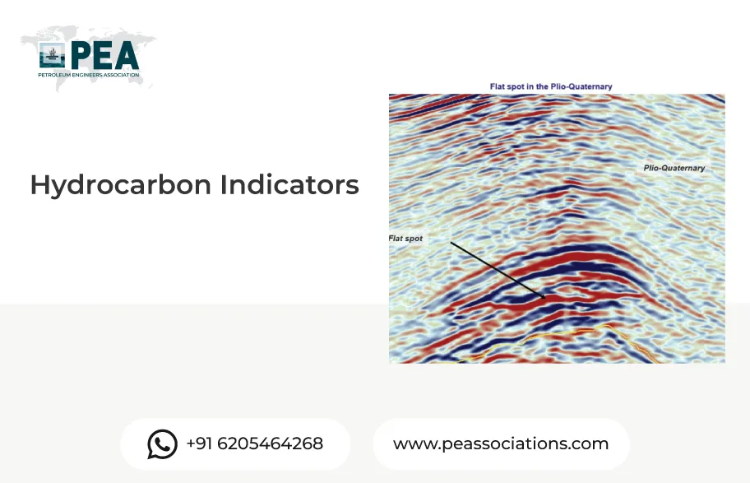
This workshop examines the use of seismic hydrocarbon indicators for exploration and reservoir evaluation. Participants will learn how amplitude variations, direct hydrocarbon indicators (DHIs), and related attributes are applied to reduce exploration risk, improve prospect evaluation, and enhance decision-making in hydrocarbon detection.
Workshop Objectives
• Understand the principles and types of seismic hydrocarbon indicators.
• Analyze amplitude and attribute responses related to hydrocarbons.
• Evaluate the reliability and limitations of DHIs in exploration.
• Apply hydrocarbon indicators to improve prospect risk assessment.
About the Presenter
The workshop is led by a geophysics professional with extensive expertise in seismic interpretation, attribute analysis, and exploration geoscience. The presenter integrates technical depth with industry experience, ensuring participants gain practical skills alongside theoretical knowledge.








Premium Workshop
For PEA Members Only
Excel in Production Engineering
Most production engineering calculations don't need expensive software — they need Excel used well. This live 2-hour beginner workshop shows you how to build the core tools of well performance analysis directly in a spreadsheet. You'll create working models for inflow performance, nodal analysis, and decline curves from scratch, using nothing but Microsoft Excel — so you understand what's happening under the hood instead of treating commercial software as a black box.