
Image Analysis In Earth Science Using Python & Multiple Software
Premium Workshop
For PEA Members Only

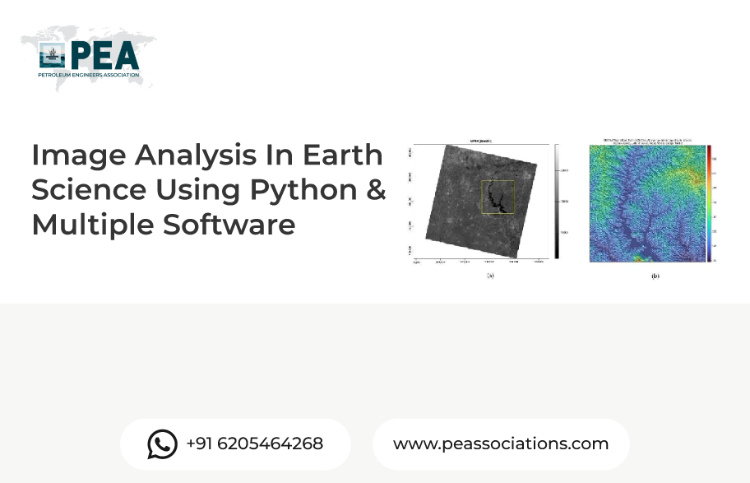
Unlock the Power of Image Analysis for Earth Science: Free Workshop
Join us for a workshop exploring the dynamic intersection of Python and cutting-edge software in image analysis for Earth science. Whether you're a seasoned researcher or a budding enthusiast, this event offers a unique opportunity to delve into the fascinating world of Earth observation through a hands-on, interactive learning experience.
Workshop Objectives
Foundations of Image Analysis
Introduction to Python for Earth Science Applications
Basics of Remote Sensing and Image Processing
Advanced Techniques and Practical Applications
Leveraging Python Libraries for Image Analysis
Case Studies and Real-world Applications in Earth Science
About the Presenter
The presenter is an experienced industry professional with a strong background in reservoir engineering, geoscience, and digital technologies. With extensive expertise in applying computational tools and software to complex subsurface challenges, the presenter brings practical insights into bridging traditional methods with modern data-driven approaches.








Premium Workshop
For PEA Members Only
Excel in Production Engineering
Most production engineering calculations don't need expensive software — they need Excel used well. This live 2-hour beginner workshop shows you how to build the core tools of well performance analysis directly in a spreadsheet. You'll create working models for inflow performance, nodal analysis, and decline curves from scratch, using nothing but Microsoft Excel — so you understand what's happening under the hood instead of treating commercial software as a black box.