Mechanical Equipment Inspection: Hazardous Areas (Ex11 CompEx)
Premium Workshop
For PEA Members Only

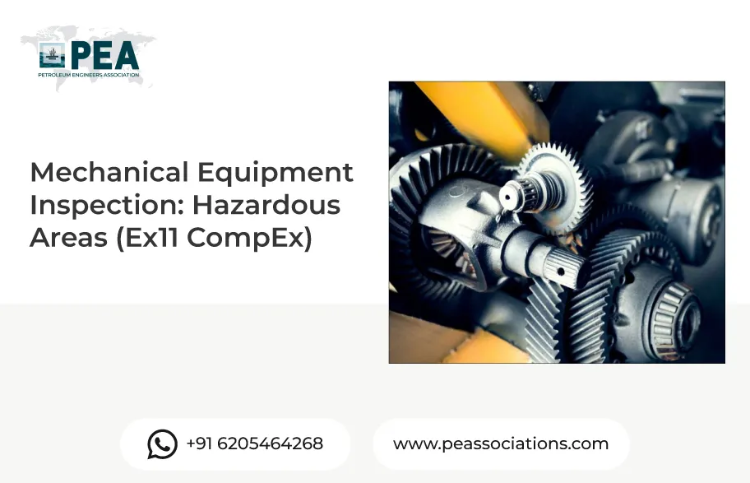
This workshop provides specialized training on the inspection of mechanical equipment in hazardous areas, with a focus on Ex11 CompEx requirements. It covers hazardous area classification, equipment protection concepts, inspection methodologies, and compliance with international standards. Participants will gain practical knowledge to ensure the safe selection, operation, and maintenance of mechanical equipment in explosive atmospheres.
Workshop Objectives
• Understand hazardous area classifications and equipment protection concepts.
• Apply Ex11 CompEx requirements for mechanical equipment inspection.
• Evaluate compliance with international standards and regulatory frameworks.
• Identify and mitigate risks associated with hazardous area equipment.
• Strengthen technical decision-making to enhance safety and reliability in hazardous operations.
About the Presenter
The workshop is conducted by an industry professional in hazardous area engineering, equipment inspection, and compliance assurance. With strong technical and training experience, the presenter provides participants with practical, industry-focused knowledge to effectively manage inspection and safety requirements in hazardous environments.




Premium Workshop
For PEA Members Only
Excel in Production Engineering
Most production engineering calculations don't need expensive software — they need Excel used well. This live 2-hour beginner workshop shows you how to build the core tools of well performance analysis directly in a spreadsheet. You'll create working models for inflow performance, nodal analysis, and decline curves from scratch, using nothing but Microsoft Excel — so you understand what's happening under the hood instead of treating commercial software as a black box.