


An Interactive 5-Day Training Course
Deepwater Production Systems
Producing in Deep Water
Secure your spot now!
Duration
5 Days
Price
$ 4,000
Starting From
28 Jun 2027



Deepwater Production Systems
Have Questions ?
Deepwater Production Systems - PE-DWP-PEA27
| Code | Date | Time | Duration | Location | Currency | Early Bird Fee Per Person |
|---|---|---|---|---|---|---|
| PE-DWP-PEA27 | 28 Jun - 02 Jul 2027 | 10 AM CST | 4 Hours Per Day |
Online |
USD |
4000 |
Need this for a group? We deliver the same course in-house — face-to-face at your location or online — tailored to your assets and team level. Contact info@peassociations.com.
Boost your team's skills and your budget! Enjoy group discounts for collaborative learning. Send an inquiry to info@peassociations.com.
Deepwater Production Systems
Description
Deepwater developments concentrate the hardest problems in production engineering: high pressures, cold seabed temperatures, long tiebacks, limited intervention access and very high cost per well. The engineering decisions taken during development define what operations can and cannot do for the life of the field, so understanding the system as a whole matters more here than anywhere else.
This course covers that system. It starts with deepwater field development concepts, host selection and subsea tieback architecture, then covers well and completion design for deepwater conditions, including high rate completions, sand control and intelligent completions. It then covers subsea equipment ratings, risers, flexible and rigid systems, and mooring and station keeping. The second half covers subsea boosting and processing, including multiphase pumps, subsea separation and gas compression, flow assurance in cold deep water, production operations and monitoring, intervention constraints and methods, and the economics that drive deepwater decisions.
In deep water, seabed temperature is close to freezing and the distance from well to host may be tens of kilometres. Fluid arriving at the host has cooled a long way, and any shutdown starts a race between restart and hydrate formation. Insulation, chemical injection, boosting and blowdown capability all exist to manage that, and each adds cost and complexity.
Well count is low and cost per well is extremely high, so deepwater wells are designed for high rates and long life. That means large tubing, high specification completions, sand control where needed, downhole monitoring as standard and, frequently, intelligent completions with zonal control, because the alternative of intervening later may cost more than the well produces in a year.
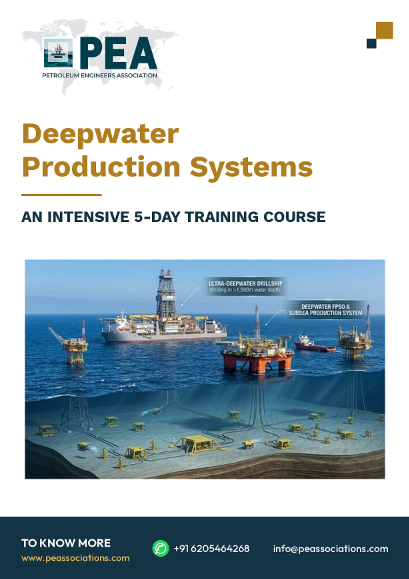
Subsea boosting and processing have changed what is possible. Multiphase pumps on the seabed reduce back-pressure on the wells and extend tieback distance; subsea separation removes water before it is lifted; subsea gas compression maintains gas production late in field life. These are expensive and add subsea reliability risk, so the trade-off between recovery gain and complexity is the central deepwater development question. This course covers the engineering and that judgement.
By the end of this training, participants will be able to:
- Describe deepwater field development concepts and host facility options.
- Evaluate subsea tieback architecture and its limits.
- Describe deepwater well and completion design requirements.
- Specify subsea equipment for deepwater pressure and temperature conditions.
- Describe riser systems, mooring and station keeping.
- Evaluate subsea boosting, separation and compression options.
- Design flow assurance strategies for cold deepwater systems.
- Plan deepwater production operations and monitoring.
- Plan intervention within deepwater access and cost constraints.
- Evaluate the economics that drive deepwater development and operating decisions.
Organisations sending participants to this training will:
- Build a common understanding of deepwater systems across technical teams.
- Improve development decisions on architecture, boosting and completions.
- Improve flow assurance design and operating procedures for long tiebacks.
- Plan interventions realistically against deepwater cost and access constraints.
- Support better evaluation of deepwater project economics.
Participants will:
- Understand how deepwater production systems are configured and why.
- Understand deepwater well, completion and subsea equipment requirements.
- Be able to evaluate boosting and subsea processing options.
- Understand flow assurance in cold, long tieback systems.
- Understand the cost drivers behind deepwater decisions.
- Production engineers in offshore and deepwater assets
- Subsea and facilities engineers
- Completion and well engineering staff
- Flow assurance engineers
- Field development and project engineers
- Asset and planning engineers
Module 1: Deepwater Development Concepts
- Water depth classifications and their implications
- Host options: floating production units, tension leg platforms and spars
- Subsea tieback to existing hosts
- Standalone versus hub developments
- Concept selection drivers
Module 2: Deepwater Wells and Completions
- High rate completion design
- Large bore tubing and flow constraints
- Sand control in deepwater reservoirs
- Intelligent completions and zonal control
- Downhole monitoring as standard
- Well cost and its consequences
Module 3: Subsea Equipment for Deep Water
- Tree and wellhead pressure ratings
- Manifolds and distribution equipment
- Materials and elastomers for low temperature
- Equipment reliability requirements
- Qualification of new technology
Module 4: Risers and Station Keeping
- Flexible, rigid and hybrid riser systems
- Steel catenary risers
- Riser integrity and monitoring
- Mooring systems
- Dynamic positioning
- Disconnection systems in harsh environments
Module 5: Subsea Boosting and Processing
- Multiphase and single-phase subsea pumps
- Subsea separation systems
- Subsea gas compression
- Power supply and distribution subsea
- Reliability and intervention risk
- Value case for subsea processing
Module 6: Flow Assurance in Deep Water
- Cold seabed temperature and long tiebacks
- Hydrate management strategy
- Wax and asphaltene risk
- Cool-down, blowdown and restart
- Chemical injection over long distances
- Slugging in long flowlines and risers
Module 7: Production Operations
- Start-up and ramp-up of deepwater wells
- Steady operation and monitoring
- Well testing and allocation subsea
- Managing constraints at the host
- Deferment management
Module 8: Intervention in Deep Water
- Access limitations and costs
- Light well intervention and riserless methods
- Rig-based intervention
- Planning interventions around campaigns
- Designing wells to minimise intervention need
Module 9: Economics and Decision Making
- Deepwater cost structures
- Recovery gains from boosting and intelligent completions
- Reliability risk and its cost
- Phasing and tieback of later discoveries
- Decision drivers in deepwater developments
Upon successful completion of this training course, delegates will be awarded an official Certificate of Completion issued by the Petroleum Engineers Association (PEA), an ISO 9001:2015 certified training organization. The certificate carries 10 Credits and formally records the total learning hours completed.
Each certificate is signed by the Course Facilitator and the CEO of the Petroleum Engineers Association, and serves as verifiable proof of professional training that delegates can present to employers and professional bodies worldwide.
Frequently Asked Questions
All course bookings made through PEA are strictly non-refundable. By registering for a course, you acknowledge and accept that all fees are payable in full and are not subject to refund under any circumstances, including changes in personal or professional commitments or partial attendance.
PEA reserves the right to make reasonable adjustments to course content, trainers, or schedules where necessary, without entitling delegates to a refund. Comprehensive details of each course — including objectives, target audience, and content — are clearly outlined before enrolment, and it is the responsibility of the delegate to ensure the course's suitability prior to booking.
For any inquiries related to cancellations or bookings, please contact our support team, who will be happy to assist you.
